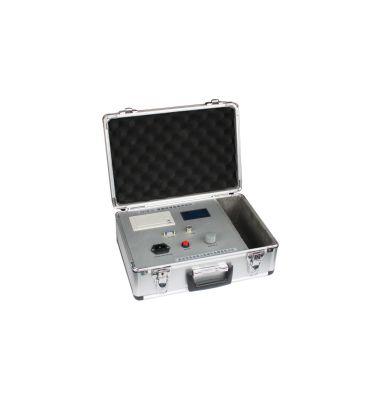
is a professional device used for phase verification and phase sequence verification in power systems. This type of instrument is particularly suitable for occasions such as power lines and substations. The following is some key information about the Same-Voltage Wireless Phase Verifier:
Working Principle
Signal Acquisition: The phase signal of the measured high voltage is acquired through the transmitting module.
Wireless Transmission: The acquired signal is transmitted wirelessly to the receiver.
Phase Comparison: After receiving the signal, the receiver performs phase comparison to determine the phase relationship between the two signals.
Result Display: The result of the phase comparison is displayed on the display screen.
Main Functions
Phase Verification: Verify the phase consistency between two or more power sources.
Phase Sequence Measurement: Determine the sequence of phases in the power system.
Voltage Detection: Check whether the line is live.
Frequency Testing: Measure the frequency of the power system.
Phase Measurement: Measure the phase difference between two phases.
Technical Features
Wireless Transmission: Uses wireless technology, no physical connection required, improving safety and flexibility.
Strong Anti-Interference: Has good anti-interference capability and can work in complex electromagnetic environments.
Intelligent Operation: Built-in microprocessor enables intelligent operation and data processing.
Easy Operation: Has self-calibration function, convenient for quick calibration before field use.
Usage Method
Power-on Self-check: Turn on the instrument power and perform a self-check to confirm whether the instrument is normal.
Voltage Detection: Before use, use it as a voltage detector to check whether the conductor has voltage. If it is live, there will be intermittent sound and light indications.
Phase Verification: After completing the voltage detection (wait for 5-10 seconds), the transmitter automatically switches to phase measurement and sends signals to the receiver.
Phase Display: After receiving the signal, the receiver displays phase information on the screen and prompts the user through sound, lights, and other methods.
Phase Sequence Judgment: Judge the phase sequence based on the displayed phase information.
Technical Parameters
Voltage Range: Typically applicable to voltage levels from 6.6kV to 500kV.
Power Supply: The detector is equipped with a rechargeable lithium battery with a voltage range of 7V to 9V DC, and can work continuously for 40 hours after fully charged.
Phase Verification Accuracy: Self-calibration error ≤2°, on-site test same-phase error ≤8°, different-phase error ≤13°.
Working Environment: Can work in a temperature range of -35°C to +50°C, with humidity ≤95%RH.
Phase Verification Judgment: ≤15° is considered as same phase.
Precautions
Safe Operation: Follow relevant safety regulations during use.
Maintenance: Perform regular maintenance to ensure the instrument is always in good condition.
Storage Conditions: Store in a dry and ventilated place, avoid prolonged exposure to humid or high-temperature environments.
Application Fields
Power Systems: Used for phase verification and phase sequence verification of power lines and substations.
Transmission Line Towers: Used for inspection and control of transmission line tower products.
Conclusion
The Same-Voltage Wireless Phase Verifier is a powerful and easy-to-operate power testing instrument, suitable for phase verification and phase sequence verification tasks in power systems. Its wireless transmission technology and intelligent design enable it to provide accurate and reliable measurement results in complex electromagnetic environments. If you need more detailed information or have specific application needs, please feel free to let me know.