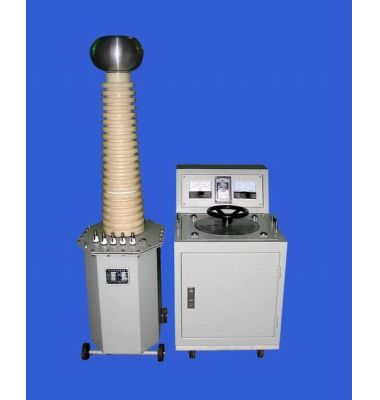

A transformer partial discharge tester is an instrument specifically used to detect whether partial discharge phenomena exist inside a transformer. Partial discharge can cause aging of the internal insulation materials of the transformer, thereby affecting its safe operation and service life. Below is an overview of an article about the transformer partial discharge tester:
Transformer Partial Discharge Tester: Principles, Applications, and Operation
Abstract
This article introduces the working principles, main application fields, and how to correctly operate the transformer partial discharge tester. Due to its high sensitivity and reliability, the transformer partial discharge tester plays an important role in the maintenance and repair work of power systems.
Introduction
As one of the key components in the power system, the health status of transformers directly affects the safe and stable operation of the power grid. The partial discharge tester can help technicians promptly detect potential problems inside transformers and prevent accidents.
Working Principle
The working principle of the transformer partial discharge tester is based on the high-frequency pulse current measurement method. When partial discharge occurs in the transformer under the test voltage, the discharge pulse signal is sent to the input unit through a coupling capacitor. The pulse signal picked up by the input unit is amplified by a low-noise preamplifier, filtered by a filter amplifier to select the required frequency band, and then amplified by the main amplifier, ultimately displaying the discharge pulse on the oscilloscope screen. At the same time, the pulse peak meter displays its peak value, and the time window unit controls the working time of the pulse peak meter within each cycle of the test voltage, further enhancing the anti-interference capability.
Main Features
High sensitivity: Capable of detecting extremely small partial discharge signals.
Wide coverage range: Large sample capacitance coverage, suitable for a wide range of test objects.
Multiple frequency band combinations: The input unit (detection impedance) is fully equipped with diverse frequency band combinations, which can be selected as needed.
Intuitive display: Uses a color LCD screen to display graphics, facilitating observation and analysis.
Waveform locking function: Helps to lock the waveform for in-depth analysis.
Application Fields
Power systems: Used to detect transformers in power systems to ensure their normal operation.
Substations: Monitor transformers in substations to prevent faults.
Laboratory testing: Evaluate the quality and performance of transformers in a laboratory environment.
Operation Steps
Connect equipment: Correctly connect the high-frequency current transformer and the main unit according to the instructions.
Set parameters: Adjust the relevant settings of the main unit according to test requirements, such as selecting channels and setting frequency ranges.
Start test: Turn on the main unit, gradually increase the test voltage, and observe whether partial discharge phenomena occur.
Data analysis: Record the peak value of discharge pulses and other relevant data for analysis.
Save records: Use a USB drive to save test results for subsequent analysis.
Precautions
Safe operation: Ensure all safety measures are in place before conducting tests.
Precise calibration: Regularly calibrate the instrument to ensure the accuracy of test results.
Professional training: Operators should receive professional training and be familiar with the use of the instrument.
Conclusion
The transformer partial discharge tester is an indispensable tool in power system maintenance, helping technicians promptly detect and resolve potential problems in transformers, ensuring the safe and stable operation of the power system.
Please note that this is only a general overview of the article. If you need more detailed technical parameters, application scenarios, or purchase recommendations, please refer to the manufacturer's materials or consult professionals in the relevant field.