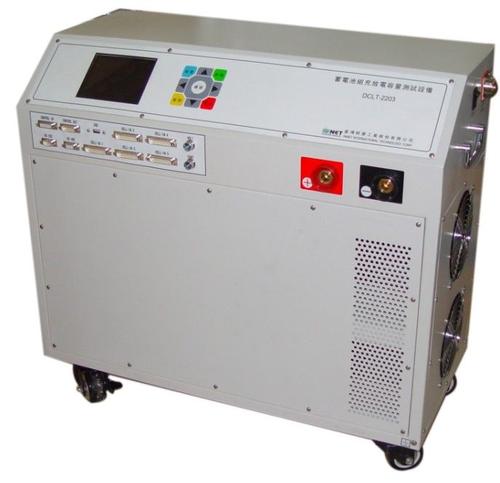
With the continuous development of the power system, ensuring the reliability and safety of power equipment has become increasingly important. Partial discharge (PD) is one of the main causes of power equipment failure, especially for high-voltage equipment. As an advanced detection tool, the ultrasonic partial discharge inspection and locating instrument can detect ultrasonic signals generated by partial discharge while the power equipment is in operation, thereby enabling early fault warning and effectively improving the operational efficiency and safety of the power system.
Working Principle
The working principle of the ultrasonic partial discharge inspection and locating instrument is based on the ultrasonic signals generated by partial discharge. When partial discharge occurs in the insulating materials of power equipment due to defects or damage, a series of electromagnetic waves and acoustic waves are generated, including ultrasonic signals with frequencies higher than 20 kHz, which cannot be heard by the human ear but can be detected by professional equipment. The ultrasonic partial discharge inspection and locating instrument uses built-in ultrasonic sensors to capture these signals and determines whether partial discharge exists in the power equipment and its location through signal analysis and processing.
Technical Features
High Sensitivity: It can detect very weak ultrasonic signals, helping to identify potential partial discharge phenomena early.
Non-contact Detection: It can complete detection without directly contacting the power equipment, making it safe and convenient.
Accurate Positioning: By analyzing signal strength and propagation characteristics, it can precisely determine the location of partial discharge.
Versatility: It is suitable for various types of power equipment, including transformers, cables, circuit breakers, GIS, etc.
Real-time Monitoring: It can monitor equipment status in real time, promptly detect abnormalities, and take measures.
Intelligent Analysis: The built-in software can automatically identify and analyze signal characteristics, assisting technicians in quickly determining fault types.
Application Fields
Power Industry: Used for condition monitoring and fault diagnosis of power equipment, especially in substations, power plants, and other locations.
Industrial Manufacturing: Used for maintenance and repair of large motors, high-voltage cables, and other equipment.
Rail Transit: Used for power system maintenance of facilities such as subways and light rails.
Research Institutions: Used for research and testing of power equipment in laboratories.
Usage Methods
Preparation: Ensure the inspection and locating instrument has sufficient battery, and select appropriate sensor accessories.
Install the sensor: Choose the appropriate sensor according to the detection target and install it correctly.
Parameter Settings: Set parameters such as frequency range and sensitivity according to detection requirements.
Start Detection: Turn on the inspection and locating instrument, and place the sensor near or on the equipment to be tested.
Signal Analysis: Observe the signal strength changes on the display and record abnormal signals.
Locate Faults: Determine the specific location of partial discharge through signal analysis software.
Report Generation: Write a detailed inspection report based on the detection results and provide necessary maintenance recommendations.
Conclusion
The ultrasonic partial discharge inspection and locating instrument has become an indispensable tool in power equipment maintenance due to its high sensitivity, non-contact detection, and precise positioning capabilities. By regularly using such instruments for inspections, the reliability of the power system can be significantly improved, the risk of unexpected outages can be reduced, and the service life of equipment can be extended.