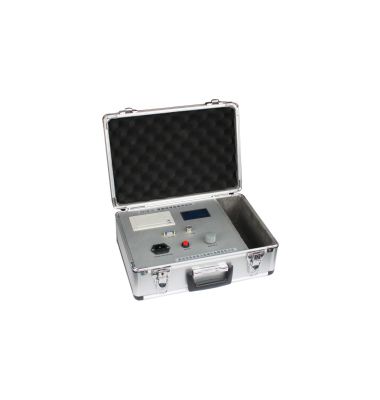
A partial discharge tester is a professional device used to detect partial discharge phenomena inside power equipment. Partial discharge detection is of great significance for evaluating the insulation condition of power equipment and preventing faults. This article will detail the working principle, characteristics, application scope, and purchasing guide of partial discharge testers.
Working Principle
The working principle of a partial discharge tester is mainly based on the physical phenomena and electrical signal changes generated during partial discharge. Common detection methods include:
Pulse current method: Detects the pulse current signals generated by partial discharge.
Ultrasonic monitoring: Detects ultrasonic signals generated in the discharge area.
Transient earth voltage (TEV) detection: Detects electromagnetic wave signals caused by changing electric fields.
Ultra-high frequency (UHF) detection: Detects ultra-high frequency electromagnetic wave signals generated by partial discharge.
When partial discharge occurs under the test voltage, the pulse control signal of the partial discharge detector will be discharged through the system coupling capacitor and sent to the input data unit. Then, through the information input unit, the pulse signal pickup is learned and amplified by a low-noise amplifier to enhance the pulse signal. The desired frequency band is selected in the filter amplifier, and after amplification by the main amplifier, the required pair value and zero mark pulse are achieved. Above the elliptical scanning baseline on the oscilloscope screen, visible discharge pulses will be produced.
Main Features
Features of partial discharge testers include
High detection sensitivity: Capable of detecting tiny partial discharge phenomena.
Easy operation: Equipped with a user-friendly interface for convenient on-site operation.
Data recording and analysis: Can record detection data and analyze it through software.
Multiple display modes: Supports elliptical, linear, sinusoidal, and other display modes for easy observation of discharge pulses.
Auxiliary functions: Some advanced models also feature auxiliary zero-marking systems, linear/logarithmic dual-function analog meters, and digital meters.
Application Scope
Partial discharge testers are widely used in the maintenance and repair of power systems, including but not limited to:
Power transformers: Used to monitor partial discharge conditions inside transformers.
High-voltage switchgear: Monitors partial discharge phenomena inside switchgear.
Cable terminations: Detects partial discharge in cable terminations.
Instrument transformers: Detects partial discharge in voltage and current transformers.
Power cables: Evaluates the insulation condition of cables.
Purchasing Guide
When selecting a partial discharge tester, the following points should be noted:
Detection sensitivity: Confirm whether the device's detection sensitivity meets requirements.
Operational convenience: Choose a device that is simple to operate and has a user-friendly interface.
Data analysis capabilities: Consider whether the device has strong data analysis functions for subsequent evaluation and diagnosis.
Compatibility: Ensure the device is compatible with existing test systems.
After-sales service: Understand the warranty period and service policies provided by the manufacturer to ensure timely support in case of issues.
Recommendation of Excellent Partial Discharge Tester Manufacturers
Jiangsu Jiuyi Electric Power Equipment Co., Ltd.: Provides high-performance partial discharge testers suitable for various detection needs.
Zhuoya Electric: Focuses on the R&D and production of partial discharge testers, with rich experience and a good market reputation.
Wuhan Hezhong Electric: Committed to the manufacturing of partial discharge testers, with reliable product quality and thoughtful service.
Conclusion
Partial discharge testers are one of the indispensable tools in power system maintenance, playing an important role in preventing and reducing power equipment faults. By comprehensively considering the above factors, users can select the most suitable partial discharge tester for their needs.
Please adjust the content of this article according to your specific needs, and if you need more detailed information or specific data, feel free to let me know.