
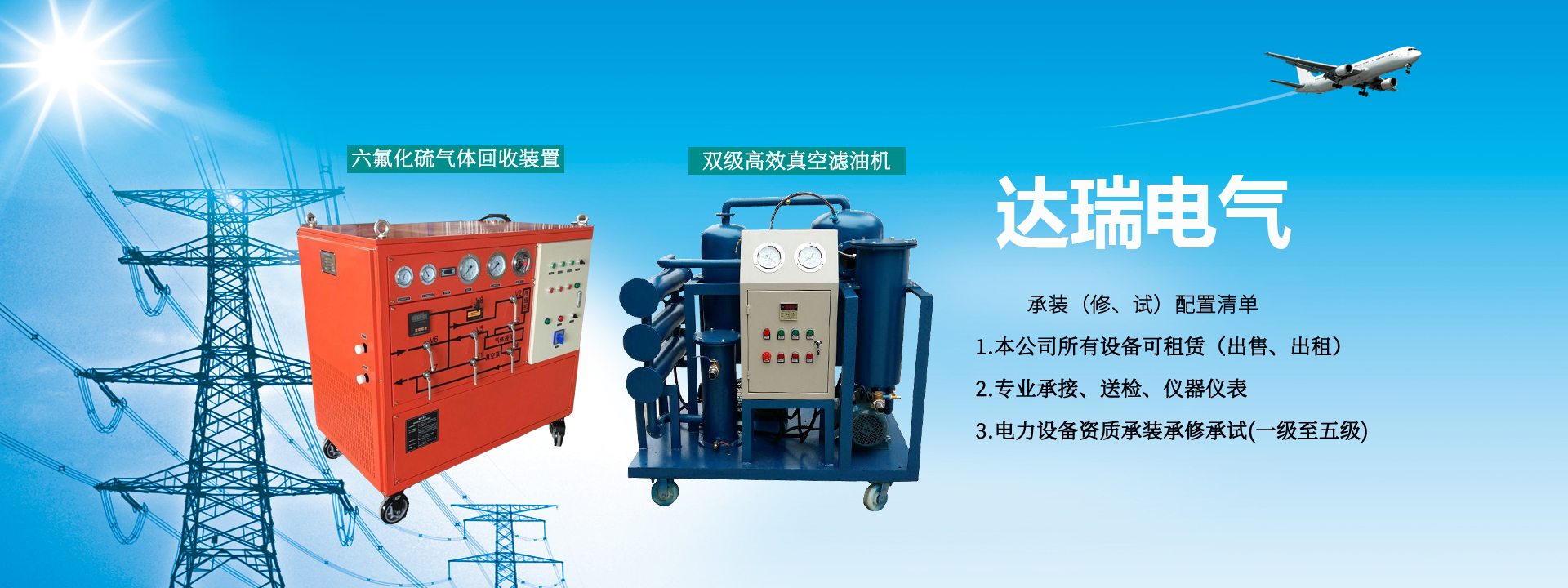
Instructions for Using the Vacuum Oil Purifier and Troubleshooting Methods
Connect the oil inlet and outlet pipes, connect to 380V, ensure proper grounding, check that all electrical connections are secure, and verify that all oil circuit valves are open. After confirming everything is in order, proceed with the operation. Start the cooling water pump first, check that the water circulation is normal, then briefly start the vacuum pump to ensure the oil inside it circulates properly, then run the vacuum pump continuously. When the vacuum reaches its limit, open the oil inlet valve. Once oil is visible in the lower sight glass of the vacuum chamber, start the oil discharge pump to begin filtering impurities and establish normal oil circulation. Turn on the heater to evaporate moisture from the oil. If the oil contains a significant amount of water, the oil mist level in the vacuum chamber will rise. At this point, open the air release valve to control the vacuum level appropriately. Once the moisture decreases and the oil mist level drops, close the air release valve to achieve maximum vacuum. Pay attention to the readings on all gauges. If the pressure gauge reads above 0.3 MPa, it indicates that the filter paper in the clarifier has absorbed many impurities and needs to be replaced. After completing the work, refer to the working principle, open the air release valve to bring the vacuum to normal atmospheric pressure, drain the oil from the chamber, and release any remaining oil from the drain plug to prevent mixing with different oil types during future use. In winter, pay special attention to draining all water from the vacuum pump and water tank to prevent freezing damage.
Troubleshooting Methods
Fault Condition | Cause | Troubleshooting Method |
Vacuum level does not reach technical standard | 1. The oil being filtered contains excessive water, and the vacuum pump exhausts too much water vapor; 2. The altitude of the usage location is not at standard atmospheric pressure, affecting vacuum level changes; 3. The vacuum oil in the vacuum pump is below the low oil level line; 4. The vacuum oil has high water content due to prolonged use; 5. Air leaks at connection seals; 6. Wear of vacuum pump wearing parts. | 1. This is normal; multiple filtration passes are needed; 2. This is normal; increase the oil temperature to evaporate water; 3. Add more vacuum oil; 4. Replace with new oil; 5. Inspect and repair; 6. Replace wearing parts. |
Under normal operating conditions, pressure exceeds 0.3 MPa | 1. The oil outlet pipe is too long, the discharge height is too high, the outlet diameter is too small, or the pipe is too small; 2. The filter has absorbed many impurities. | 1. Change the working environment; 2. Replace the filter paper or clean the filter element. |
Oil spray from vacuum pump | 1. The oil being filtered has high water content, causing the oil mist to rise and be drawn into the vacuum pump, raising the oil level in the vacuum pump; 2. The seal gasket inside the vacuum pump is displaced or damaged. | 1. The vacuum oil level must not exceed the oil level line; 2. Inspect and repair. |
Oil temperature control malfunction or no temperature | 1. The oil temperature does not match the thermometer reading; 2. The heater is burned out, or there is a circuit break, or the contact arm is not properly engaged. | 1. Adjust the oil temperature control; 2. Inspect the circuit and replace the heater. |
Oil discharge pump has no pressure or insufficient oil output | 1. The primary filter screen is clogged; 2. The oil seal of the discharge pump leaks air; 3. The oil inlet pipe is blocked, drawing from the bottom of the chamber; 4. The suction pipe is too thin or the suction depth is too deep; 5. The spray nozzle holes in the vacuum chamber are clogged. | 1. Clean the filter screen; 2. Adjust the oil seal cover, or replace the oil seal if necessary; 3. Inspect and repair; 4. Improve the environment; 5. Disassemble and clean. |