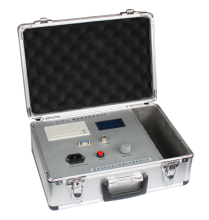
In many industrial applications, the quality of compressed air directly affects production efficiency and product quality. Moisture and other impurities in the air can lead to equipment corrosion, pipeline blockage, and product contamination. As a device that effectively removes moisture from the air, the air dry generator plays a crucial role in improving the quality of compressed air. This article will detail the working principles, main types, and wide applications of air dry generators.
1. What is an air dry generator?
An air dry generator is a device specifically designed to reduce the moisture content in compressed air by removing water vapor through physical or chemical methods to achieve the desired dew point temperature (the temperature at which water vapor in the air condenses into liquid water). A lower dew point means drier air, suitable for applications requiring high air quality.
2. Working Principle
Air dry generators typically use the following technologies to achieve air drying:
Refrigerated Drying:
Using a refrigerant circulation system to cool compressed air to near freezing temperatures, causing water vapor to condense into liquid water, which is then discharged through a separation device.
This method is suitable for handling large volumes of compressed air, but the minimum dew point achievable is relatively high (generally between 2°C and 10°C).
Adsorption Drying:
Using desiccants with high adsorption capacity (such as silica gel, molecular sieves, etc.) to absorb water vapor from the air.
The drying process is divided into two stages: adsorption and regeneration. While one tower is in the adsorption phase, the other tower regenerates the desiccant through heating or other methods.
It can achieve very low dew points (as low as -40°C or even lower), suitable for applications requiring extremely high air quality.
Membrane Drying:
Based on semi-permeable membranes made of special materials, allowing water vapor to pass through the membrane layer more quickly and be discharged, thereby achieving air drying.
It has the advantages of simple structure and easy maintenance, but its drying effect is not as ideal as adsorption dryers.
3. Main Types and Characteristics
Refrigerated Air Dryer: Lower cost, simple operation, suitable for most general industrial applications. However, it is not suitable for environments requiring extremely low dew points.
Adsorption Air Dryer: Provides higher quality dry air, especially suitable for industries with strict air quality requirements such as pharmaceuticals and food processing. However, initial investment and operating costs are relatively higher.
Membrane Air Dryer: Compact in size, easy to install and move, ideal for small equipment or spaces with limited area.
4. Application Scenarios
Manufacturing: Ensures that compressed air used in processes such as spraying and welding is free of moisture, preventing impact on product quality.
Food and Beverage Industry: Provides clean, dry air for packaging, storage, and other stages, preventing food from getting damp and spoiling.
Pharmaceutical Industry: Uses highly pure dry air in drug production and packaging processes to ensure drug quality.
Electronics Industry: Provides a dust-free, moisture-free environment for the manufacturing of precision electronic components, preventing static damage.
5. Summary
Air dry generators are important tools for improving the quality of compressed air, protecting production equipment, and ensuring the quality of final products. Regardless of the type of air dry generator, choosing the appropriate technical solution should be based on specific application needs and budget considerations. With technological advancements, air dry generators are becoming increasingly efficient and energy-saving, providing strong support for various industries. Manufacturers like Yangzhou Darui Electrical Co., Ltd. provide high-quality air dry generators, based on a deep understanding of these basic principles and continuous innovation in technology, solving many practical problems for enterprises and improving production efficiency and safety.