
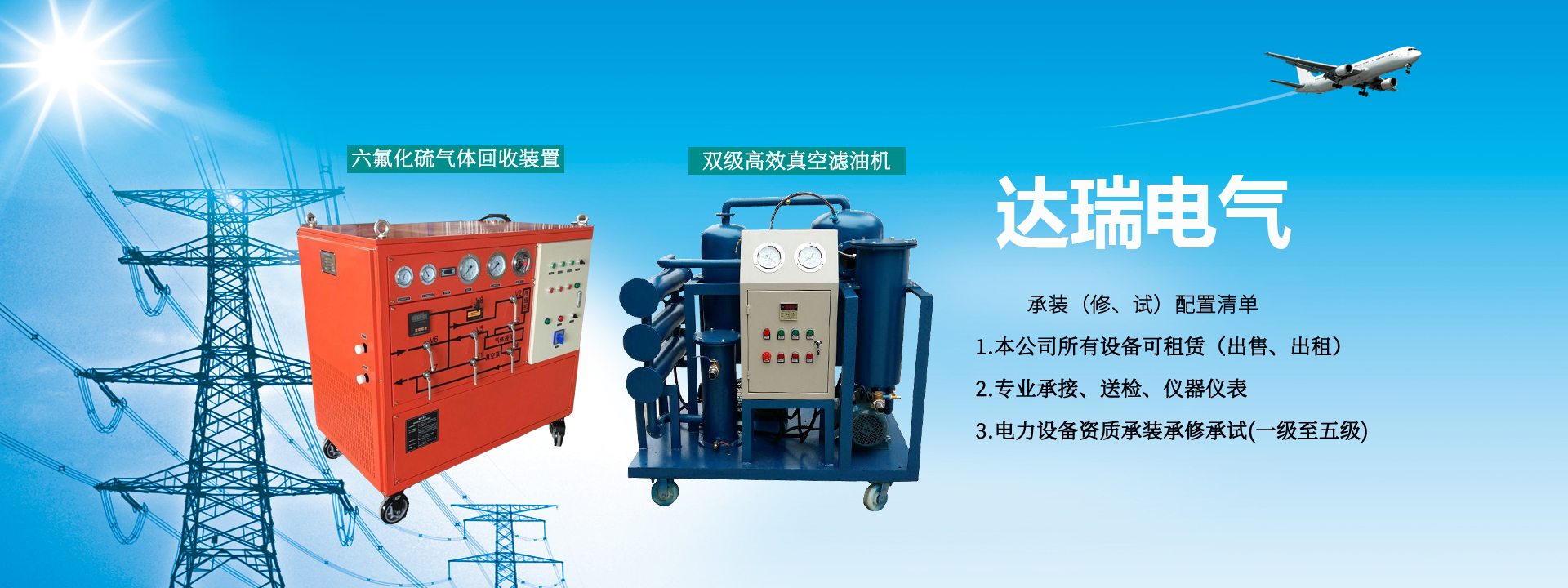
SF6 (Sulfur Hexafluoride) is a colorless, odorless, non-flammable, and chemically stable gas
Due to its excellent electrical insulation properties and arc-extinguishing characteristics, it is widely used in high-voltage electrical equipment such as circuit breakers, switchgear, and transformers. However, SF6 is also a potent greenhouse gas, with a global warming potential (GWP) many times higher than that of carbon dioxide. Therefore, proper handling of SF6 gas, including the vacuum recovery process, is crucial for environmental protection.
The Importance of SF6 Vacuum Recovery
Environmental Protection: Preventing SF6 leakage into the atmosphere is one of the key measures to reduce the greenhouse effect.
Resource Reuse: By recovering SF6 gas, it can be purified and reused, thereby saving costs and reducing dependence on new SF6 production.
Maintaining Equipment Safety: When performing equipment maintenance or decommissioning, ensuring thorough removal of internal SF6 gas helps guarantee the safety of subsequent operations and provides a clean environment for refilling.
The Process of Vacuum Recovery
Preparation Phase: First, close all valves of the equipment to be processed and connect it to a dedicated SF6 recovery device. Ensure the entire system is well-sealed to avoid any leakage.
Vacuuming: Use a vacuum pump to evacuate the system, aiming to remove air and other impurities, creating conditions for SF6 recovery. This step also helps check the system's airtightness.
Recovering SF6 Gas: Once the system reaches the required vacuum level, the SF6 gas recovery can begin. Typically, this process involves transferring the gas from the equipment to a storage tank, during which preliminary filtration and cooling may be necessary.
Purification Treatment: The recovered SF6 gas often contains moisture, decomposition products, and other impurities, and must undergo purification to meet reuse standards. Purification methods include adsorption, filtration, and low-temperature distillation.
Storage and Reuse: The purified SF6 gas is stored for future use in other electrical equipment.
Precautions
When performing SF6 vacuum recovery work, operators should wear appropriate personal protective equipment (PPE), including gloves, goggles, and respirators.
Ensure all equipment used is in good condition, and regularly inspect and maintain it to prevent accidents.
Follow local environmental regulations and standards, and properly dispose of waste SF6 gas to avoid environmental pollution.
In summary, SF6 vacuum recovery is not only an important part of ensuring the normal operation of high-voltage electrical equipment but also a key measure to achieve green and sustainable development goals. Through scientific management and the application of technical means, we can effectively reduce SF6 gas emissions and protect our planet.