
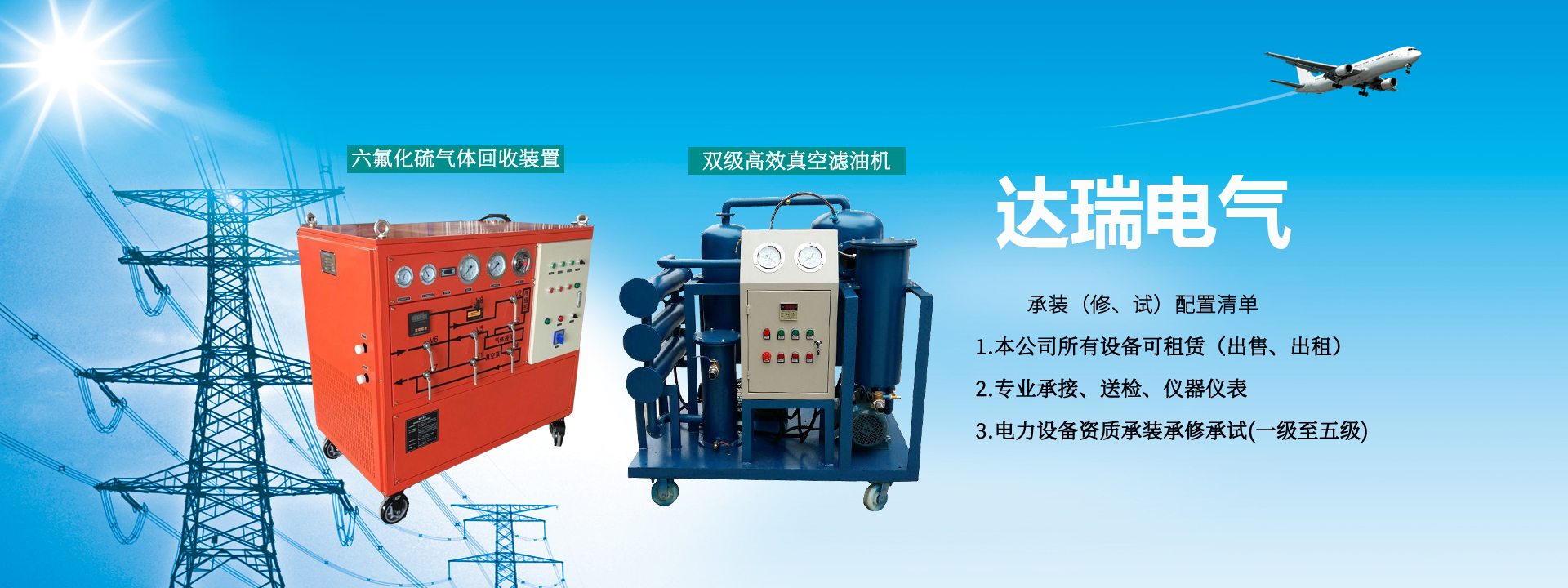
SF6 is widely used in high-voltage switchgear, circuit breakers, transformers, and other electrical facilities due to its excellent electrical performance and chemical stability. However, due to its high GWP value, once leaked into the atmosphere, it can have a serious impact on global warming. Therefore, the international community has strict environmental regulations on the use of SF6, requiring minimal emissions and the recovery and reuse of waste SF6.
Process of Vacuum Recovery
1. Preparation Stage
Before starting the vacuum recovery, it is necessary to prepare the corresponding equipment and tools, including a dedicated SF6 recovery device, vacuum pump, gas storage tank, pipe connectors, and necessary safety protective equipment.
2. Operation Steps
Disconnect the power supply: Ensure that the equipment is powered off before operation and take measures to prevent misoperation.
Connect the pipes: Connect the recovery device to the equipment containing SF6 through appropriate interfaces.
Evacuate: Turn on the vacuum pump to extract the SF6 gas from the equipment to a predetermined vacuum level, which helps remove moisture and other impurities from the equipment.
Recover gas: After reaching the required vacuum level, use the recovery device to transfer the SF6 gas from the equipment to the gas storage tank.
Purification treatment: The recovered SF6 gas needs to undergo purification processes such as filtration and drying to remove moisture, decomposition products, and other impurities, making it meet the standards for reuse.
Refilling recovery: The purified SF6 gas can be refilled into the equipment or stored for future use.
Safety Precautions
Professional training: Operators must receive professional training to understand the properties and hazards of SF6 and master the correct operating procedures.
Personal protection: Wear appropriate personal protective equipment, such as gas masks, protective goggles, and gloves.
Environmental monitoring: During operation, the concentration of SF6 in the surrounding environment should be monitored to ensure it does not pose a threat to human health.
Conclusion
With the enhancement of environmental awareness and technological progress, the vacuum recovery of SF6 has become an important task in the power industry. Reasonable and effective management of SF6 not only helps reduce environmental impact but also saves costs for enterprises and improves resource utilization. In the future, with the development of technology, the recovery and treatment of SF6 will become more efficient and environmentally friendly.
This article outline can serve as a basis, and detailed operating guidelines, case analyses, or the latest technological and policy developments can be added according to specific circumstances.