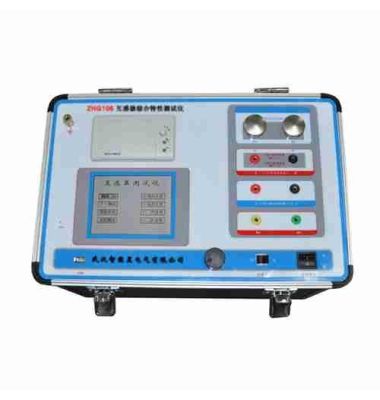
The following is an article about “High-Efficiency Detection: Working Principle and Usage of Loop Resistance Tester”, which details the working principle, functional features, and applications of the loop resistance tester in electrical systems:
High-Efficiency Detection: Working Principle and Usage of Loop Resistance Tester
Introduction
In electrical engineering and maintenance work, ensuring the safety and reliability of electrical connections is crucial. As a professional testing tool, the loop resistance tester is widely used in power systems, industrial equipment, and building electrical installations. This article will detail the working principle, main functions, and applications of the loop resistance tester in electrical systems.
Working Principle of Loop Resistance Tester
The loop resistance tester is mainly used to measure the contact resistance of electrical connection points to ensure their reliability and safety. Its working principle mainly includes the following aspects:
DC Injection Method: This is one of the most common testing methods. It injects a stable DC current into the loop under test and measures the voltage drop across the loop. According to Ohm's law (
V=I×R), the resistance value of the loop can be calculated.
Test Current: Generally ranges from a few amperes to several hundred amperes to ensure sufficient sensitivity.
Measurement Accuracy: Usually reaches micro-ohm levels (μΩ) to accurately reflect the condition of the connection point.
Four-Terminal Method (Kelvin Clamp Method): To avoid the influence of lead resistance on measurement results, the loop resistance tester uses the four-terminal method. This method uses two pairs of terminals, one pair for injecting current and the other for measuring voltage drop, ensuring measurement accuracy and repeatability.
Temperature Compensation: Since resistance values change with temperature, some advanced testers are equipped with temperature compensation functions to provide accurate measurement results under different temperature conditions.
Main Functions and Features
High-Precision Measurement: Capable of accurately measuring small resistance values, ensuring the accuracy of test results.
Multiple Measurement Modes: Supports different test currents and measurement modes to adapt to various application scenarios.
Data Recording and Analysis: Built-in memory can record a large amount of test data and supports data export and analysis.
User-Friendly Interface: Provides a graphical operation interface, making parameter setting and result reading simpler.
Safety Protection: Equipped with overload protection, reverse connection protection, and other safety measures to ensure the safety of operators and equipment.
Application Fields
The loop resistance tester has wide applications in multiple fields, including but not limited to:
Power Systems: Used for detecting electrical connection points in substations, power plants, etc., to ensure the safe operation of the power grid.
Industrial Equipment: In various industrial equipment, used to detect the connection resistance of key components such as motors, generators, and transformers.
Building Electrical: In building electrical installations, used to detect the resistance of connection points such as cable joints and distribution boxes, ensuring the safety of building electrical systems.
Transportation: In industries such as rail transit and automobile manufacturing, used to detect the reliability of electrical connections to ensure the safety of transportation vehicles.
Usage Methods and Precautions
Preparation:
Ensure that the device under test is powered off and has undergone appropriate safety checks.
Select the appropriate test current and measurement mode.
Connecting the Tester:
Correctly connect the current terminals and voltage terminals of the tester to the loop under test.
If using the four-terminal method, ensure that the current terminals and voltage terminals are connected to different positions.
Starting the Test:
Start the tester, wait for a stable current injection, and read the voltage drop.
Calculate the resistance value based on the test results and record it.
Precautions:
Confirm that the loop under test is completely de-energized before testing to avoid electric shock hazards.
Use the correct test current; too high or too low can affect the measurement results.
Regularly calibrate the tester to ensure its measurement accuracy.
When using in high-temperature or humid environments, pay attention to the equipment's heat dissipation and waterproofing.
Practical Cases
Substation Maintenance: During maintenance work at a substation, technicians used a loop resistance tester to test multiple electrical connection points, promptly identified several poor contact issues, and repaired them, ensuring the safe operation of the power grid.
Industrial Equipment Testing: During motor repair at a factory, a loop resistance tester was used to detect the contact resistance of motor windings, found a poorly contacted joint, and promptly replaced it, avoiding equipment failure.
Future Trends
With technological development, future loop resistance testers will become more intelligent and portable. For example, remote monitoring and data transmission can be achieved through IoT technology, big data analytics can optimize testing processes, and artificial intelligence can be used for fault prediction and health management.
Conclusion
The loop resistance tester plays an important role in the maintenance and testing of electrical systems due to its high precision, multifunctionality, and user-friendly features. By correctly using the loop resistance tester, the safety and reliability of electrical connections can be significantly improved, ensuring the normal operation of electrical systems.
References
List the relevant literature, standards, and specifications referenced in this article to ensure the accuracy and reliability of the information.
Through this article, readers can comprehensively understand the working principle, functional features, and application methods of the loop resistance tester in electrical systems.