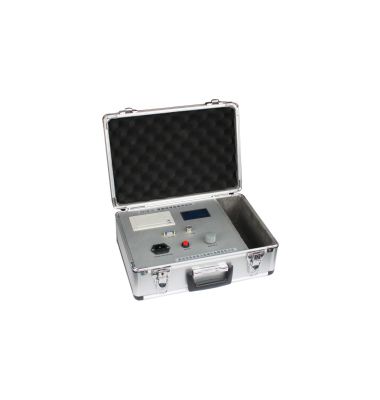
In the field of power detection, research, and maintenance, the DC high voltage generator plays a crucial role. It is a device specifically designed to generate stable, adjustable DC high voltage, widely used in withstand voltage tests and characteristic analysis of power cables, surge arresters, insulating materials, etc. This article will delve into the working principle, main functions, operation procedures, and applications of the DC high voltage generator in the power industry.
Working Principle
The core of the DC high voltage generator lies in the process of converting low-voltage AC power into high-voltage DC power. This conversion is typically achieved through multi-stage step-up transformers, rectifier circuits, and voltage stabilization control circuits. In actual operation, the voltage regulator in the control box is used to adjust the output voltage, while the voltage doubling cylinder or high-voltage tower is responsible for stepping up and rectifying the low-voltage AC into high-voltage DC. The closed-loop control system inside the device ensures the stability of the output voltage, maintaining precise control even under load variations.
Main Functions and Features
The DC high voltage generator possesses the following main functions and features:
Adjustable high voltage output: Users can manually or automatically adjust the output voltage and current according to test requirements.
Overvoltage protection: Built-in overvoltage protection mechanism; once the output voltage exceeds the set value, the device will automatically cut off the high voltage to ensure safety.
Overcurrent protection: When the current exceeds the safety limit, it automatically reduces or cuts off the high voltage output to protect the tested equipment and operators.
Safe discharge: Built-in discharge circuit that automatically discharges the high-voltage circuit after the test, avoiding danger from residual voltage.
Digital display: Equipped with voltage and current displays for real-time monitoring of test parameters, facilitating data recording and analysis.
Portability: Some models are compact and easy to carry, suitable for on-site testing.
Operation Procedures
The operation of the DC high voltage generator generally follows these steps:
Grounding connection: Ensure the device is well connected to the grounding system of the site or laboratory.
Connecting equipment: Use dedicated cables to connect the control box and the high-voltage tower, and confirm all connections are secure.
Power on: Turn on the power and check whether the indicator lights and meters are normal.
Adjusting voltage: Rotate the high-voltage output adjustment knob clockwise to gradually increase the voltage to the required test value.
Monitoring the test: Monitor the changes in voltage and current during the test through the voltmeter and ammeter.
Fault handling: If overvoltage or overcurrent occurs, the device will automatically cut off the high voltage; at this point, the cause of the problem needs to be investigated.
Safe discharge: After the test, ensure the high-voltage circuit is discharged to a safe voltage level through natural discharge or using a grounding rod.
Application Scenarios
The application range of the DC high voltage generator is extensive, including but not limited to:
Power cables: Test the insulation performance and withstand voltage strength of cables.
Surge arresters: Evaluate the discharge voltage and leakage current of surge arresters.
Power transformers: Detect the insulation condition of transformer windings.
Insulating materials: Study the electrical properties of new materials, such as breakdown voltage and dielectric constant.
Conclusion
The DC high voltage generator is an indispensable testing tool in the power industry. Its precise voltage control and comprehensive safety features make it an ideal choice for withstand voltage tests and characteristic analysis of power equipment. By mastering its operation procedures and understanding its working principle, one can effectively utilize this tool to ensure the safety and reliability of the power system. With technological advancements, future DC high voltage generators will become more efficient, safer, and more intelligent, better serving power detection and maintenance work.