
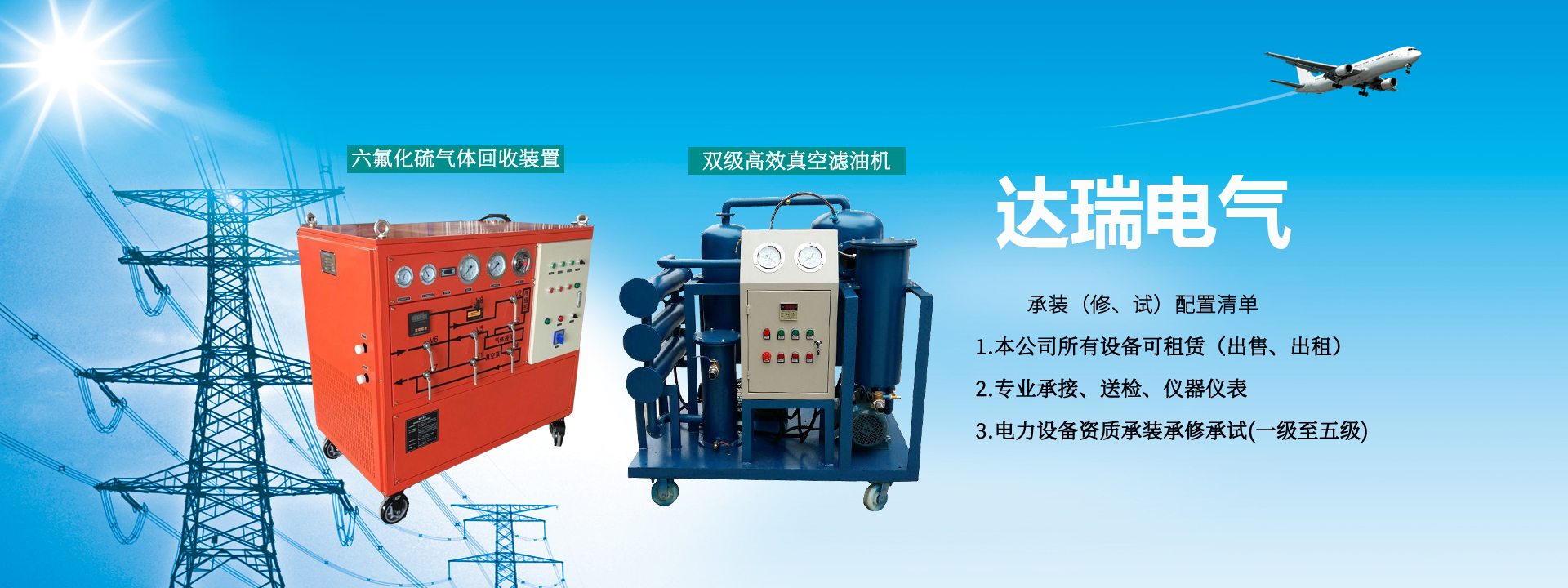
You may not know how important it is to carefully maintain the filter element and vacuum pump of the vacuum oil purifier
Vacuum oil purifier mainly relies on the filter element to filter impurities. The distribution of filter elements on the vacuum oil purifier: generally divided into coarse filter element and fine filter element. The core part of the filter is the filter element, which is composed of a filter frame, stainless steel wire mesh, and fiber material. The stainless steel wire mesh is a wear-prone part and needs special protection.
1. The filtration accuracy of the coarse filter element is generally 20-50um, and the material of the coarse filter element is generally made of stainless steel wire mesh, so the coarse filter element can be repeatedly cleaned and reused.
Fault phenomenon of the vacuum oil purifier caused by blockage of the coarse filter element: serious insufficient oil intake, resulting in the oil purifier being unable to perform normal filtration circulation.
2. The filtration accuracy of the fine filter element is generally 3-10um, and high-precision filter materials are selected, such as glass fiber composite materials. Due to its high filtration accuracy, when the filter element is blocked, it is not easy to clean. Therefore, the maintenance of the fine filter element should be to open the drain valve at the bottom of the fine filter after each oil filtration to drain the dirty oil, to avoid the formation of sludge over time, which cannot be handled later.
Fault phenomenon of the vacuum oil purifier caused by blockage of the fine filter element: the pressure in the fine filter rises rapidly, which may damage the sealing system, especially the seals of the oil pump. Once damaged, it will cause oil leakage from the oil pump, and under negative pressure, the oil pump may fail to output oil. Therefore, special attention must be paid to the maintenance of the fine filter element.
In fact, an overpressure alarm protection function can be installed on the fine filter. The principle is that when the pressure rises to 4MPa, the machine will automatically stop and alarm. The user of the oil purifier must drain the dirty oil, clean the fine filter, the fine filter element, or replace the fine filter element, and then the machine can be started normally.
The vacuum pump is also one of the main core components of the vacuum oil purifier. Therefore, the quality and operational stability of the vacuum pump are the basis for the working efficiency of the vacuum oil purifier.
Oil leakage from the vacuum pump is one of the common faults of the vacuum oil purifier, mainly occurring in three positions: the oil sight glass of the vacuum pump, the oil tank sealing gasket, and the motor bearing shaft seal. The main reason is that prolonged use of the vacuum pump causes aging of these parts, leading to seal failure and thus oil leakage. Oil leakage from the oil sight glass is caused by aging of the sight glass due to prolonged use, leading to cracking, or aging and failure of the adhesive between the sight glass and the oil tank, resulting in oil seepage. There are two oil seals on the motor shaft: the front oil seal and the rear oil seal. Aging and failure of either one can cause oil leakage. The oil tank is connected to the motor through an adapter, and there is a sealing ring at the joint between the oil tank and the adapter, which serves to seal the oil tank. If it ages, it can also cause oil leakage from the vacuum pump.
In addition, there is a felt pad on the adapter, which serves to recover pump oil. If it is saturated with absorbed oil, the vacuum pump may also experience oil seepage. The solution to oil leakage is to replace the aged oil sight glass, shaft seals, sealing gaskets, and the felt pad saturated with pump oil. After maintenance, before adding oil, the vacuum pump should be flushed with pump oil, and then new vacuum pump oil should be added.