Use of Vacuum Pumps
The arrangement structure of the pump body of a vacuum pump determines the overall structure of the pump.
For vertical structures, the inlet and exhaust ports are set horizontally, making assembly and pipeline connection convenient. However, the pump's center of gravity is higher, and stability is poor at high speeds, so this type is mostly used for small pumps.
For horizontal pumps, the inlet is on top and the exhaust port is at the bottom. Sometimes, for the convenience of vacuum system pipeline installation and connection, the exhaust port can be led out horizontally, meaning the inlet and exhaust directions are perpendicular to each other. In this case, the exhaust port can be opened from either the left or right direction; one end is connected to the exhaust pipeline, and the other end is blocked or connected to a bypass valve. This pump structure has a low center of gravity and good stability at high speeds. Generally, large and medium-sized pumps mostly adopt this structure.
The two rotor shafts of the pump are installed perpendicular to the horizontal plane. This structure makes it easy to control assembly clearances, convenient for rotor assembly, and the pump occupies a small area. However, the pump's center of gravity is higher, gear disassembly and assembly are inconvenient, and the lubrication mechanism is relatively complex.
(2) Pump transmission method
The two rotors of a vacuum pump achieve relative synchronous operation through a pair of high-precision gears. The driving shaft is connected to the motor via a coupling. There are mainly two transmission structure arrangements: one is that the motor and gears are placed on the same side of the rotor as shown in the figure. The driven rotor is directly driven by the gear on the motor end, so the torsional deformation of the driving rotor shaft is small, and the clearance between the two rotors will not change due to large torsional deformation of the driving shaft, thus making the clearance between rotors uniform during operation. The main disadvantages of this transmission method are: a. There are three bearings on the driving shaft, which increases the difficulty of processing and assembly of the pump, and gear disassembly, assembly, and adjustment are also inconvenient; b. The overall structure is not symmetrical, and the pump's center of gravity is biased towards the motor and gearbox side.
Features
(1) It has a large pumping speed over a wide pressure range;
(2) The rotors have good geometric symmetry, so vibration is small and operation is stable. There are clearances between rotors and between rotors and the casing, no lubrication is needed, friction loss is small, which can greatly reduce driving power, thus enabling higher speeds;
(3) No oil sealing and lubrication are needed in the pump chamber, which can reduce oil vapor pollution to the vacuum system;
(4) There is no compression in the pump chamber and no exhaust valve. The structure is simple and compact, and it is insensitive to dust and water vapor in the pumped gas;
(5) The compression ratio is relatively low, and the pumping effect for hydrogen is poor;
(6) The rotor surface is a curved cylindrical surface with a relatively complex shape, making processing and inspection difficult.
Optional configurations and equipment forms of the product:
Vacuum pumps, Roots pumps, electrical components, etc. are all selected from domestic ***.
Equipped with a vacuum gauge, the vacuum degree of the pumped container can be monitored in real time.
High vacuum pumping speed and low energy consumption.
Air-cooled, can be used without a water source, and the equipment operates normally.
Multiple protection functions effectively ensure the safe operation of the vacuum pump.
Advanced design, complete functions, reasonable structure, and simple and clear operation.
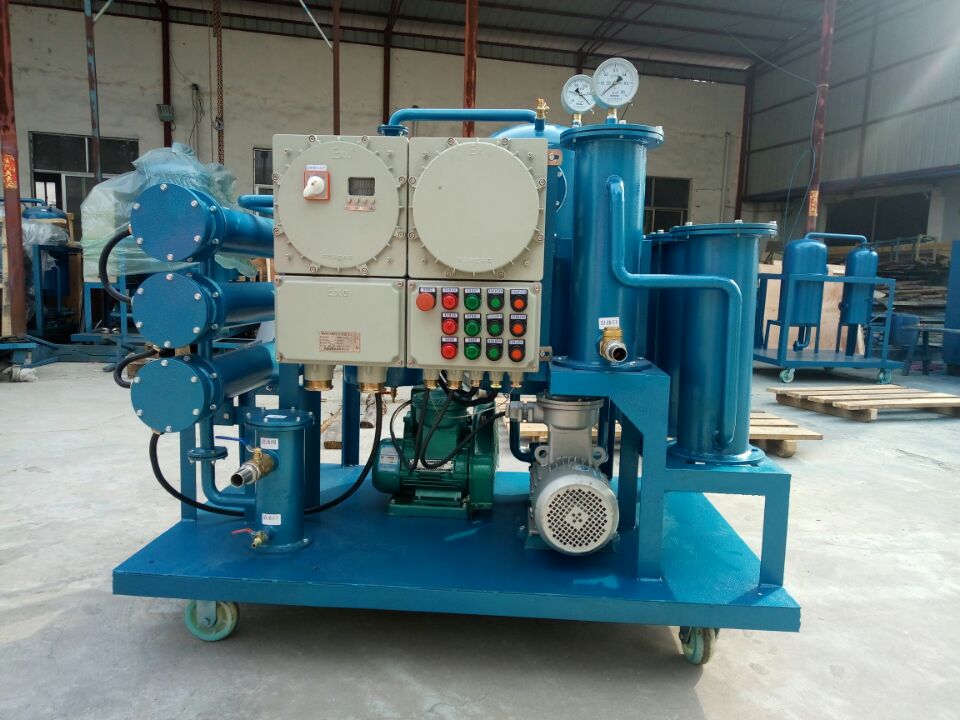
The equipment adopts a mobile structure, convenient for on-site use, and does not damage the ground.
Easy maintenance; all components are of excellent performance, and no repair is needed even after long-term use.
Maintenance and Care
The quality of a vacuum pump depends on its mechanical structure and the quality of the oil. When using a vacuum pump, it must be protected. If distilling volatile organic solvents, the organic solvent will be absorbed by the oil, increasing the vapor pressure and thus reducing the pumping efficiency. If it is acidic gas, it will corrode the oil pump. If it is water vapor, it will emulsify the oil and damage the vacuum pump.
Therefore, when using a vacuum pump, the following points must be noted:
An absorption device must be installed between the distillation system and the vacuum pump.
Before distillation, the vapor of organic solvents in the system must be thoroughly removed with a water pump.
If a water pump can be used for evacuation, try to use a water pump. If the distillation substance contains volatile substances, you can first use a water pump to reduce the pressure, and then switch to an oil pump.
The vacuum system must be kept airtight. All rubber stoppers should have appropriate sizes and holes, and rubber tubes should be vacuum-grade rubber tubes. Ground glass joints should be coated with vacuum grease.
According to the range of use and pumping efficiency, vacuum pumps can be divided into three categories:
(1) General water pumps can achieve a pressure of 1.333~100kPa (10~760mmHg), which is "rough" vacuum.
(2) Oil pumps can achieve a pressure of 0.133~133.3Pa (0.001~1mmHg), which is "medium high" vacuum.
(3) Diffusion pumps can achieve a pressure below 0.133Pa (10-3mmHg), which is "high" vacuum.
If lower pressure is required, an oil pump is needed. A good oil pump can evacuate to below 133.3Pa (1mmHg).
In organic chemistry laboratories, the commonly used vacuum pumps are water pumps and vacuum pumps. If very low pressure is not required, a water pump can be used. If the water pump is well constructed and the water pressure is high, the pumping efficiency can reach 1067~3333Pa (8~25mmHg). The lowest pressure a water pump can achieve theoretically corresponds to the water vapor pressure at the current water temperature. For example, at water temperatures of 25°C, 20°C, and 10°C, the water vapor pressures are 3192, 2394, and 1197Pa (8-25mmHg) respectively. When using a water pump for evacuation, a safety bottle should be installed before the water pump to prevent water pressure drop and water backflow; before stopping evacuation, first release the air, then turn off the water pump.