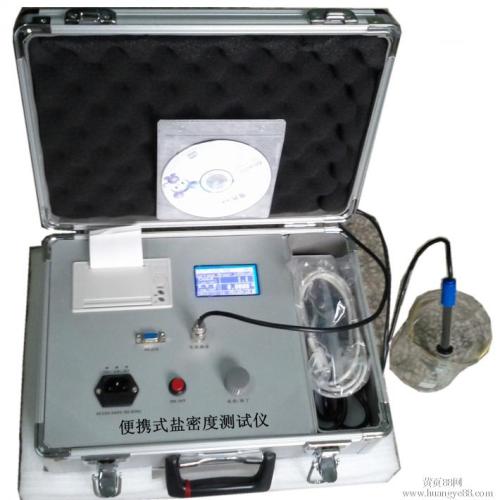
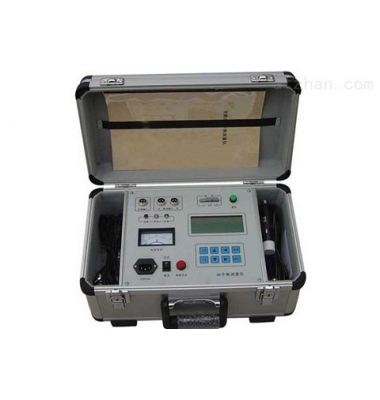
Portable Dynamic Balancing Tester is easy to operate, with human-machine dialogue, menu prompts, and measurement data can be locked and held at any time. It is compact and lightweight, with the keyboard and display on the panel, and input/output sockets and various control switches all placed on the panel. It can perform on-site dynamic balancing of various rotating machinery as a whole, equivalent to a movable balancing machine. It is exquisitely designed and portable, with the entire instrument housed in a portable instrument case. In addition to general dynamic balancing functions, it is specially designed for the whole-machine dynamic balancing of horizontal screw centrifuges and disc centrifuges, making it convenient to measure the vibration of compound drum bodies with differential speed and perform on-site dynamic balancing of the whole machine.
Technical Parameters:
1. General Measurement:
Speed Measurement: 30~30,000 rpm
General Vibration Measurement: 0.1~5000μm (Peak-to-Peak)
0.1~2000mm/s (RMS)
Vibration Analysis: FFT Spectrum Analysis
Display Mode: Dot Matrix Graphics 64X240 Dot Matrix LCD Chinese Menu
Key Board: Eight Keys
2. Dynamic Balancing Measurement:
Measurement Points: Single Point or Single Plane Dual Points or Dual Planes
Same-Frequency Operating Speed: 300~30,000 rpm When using ultra-low frequency sensors for vibration signals, the same-frequency operating speed can be reduced to 60 rpm.
Same-Frequency Amplitude Range: 0.1~5000μm (Peak-to-Peak)
Vibration Severity Range: 0.1~2000mm/s (RMS)
Phase Accuracy: 0-360°±1 °
Unbalance Removal Rate: ≥95%
Portable Dynamic Balancing Tester Advantages:
1. No need to disassemble rotating parts, reducing downtime and waste of manpower and resources.
2. Correction can be performed at actual operating speed; usually, after disassembling rotating parts, correction under a balancing machine cannot be done at high speed.
3. Many factors affect balance, including the balance of all rotating components (impellers, shafts, couplings, key seats, etc.) and installation clearances, deflection angles, etc. Therefore, direct on-site online balancing achieves better balancing results.
II. Operating Precautions
▲ During continuous measurement, do not easily press the "Reset" key, otherwise all data will be lost. If you have influence coefficients at hand, you can re-enter them.
▲ Be sure to properly mark the photoelectric marker and observe the accuracy of the machine speed. This is an important guarantee for the instrument to carry out dynamic balancing tests.
▲ There are many reasons for large machine vibration. Only when the same-frequency amplitude accounts for a large proportion of the total amplitude can the dynamic balancing method reduce vibration. Otherwise, ideal results cannot be achieved.
▲ In the dynamic balancing trial weight method, it is necessary to add a known trial weight to a known position on the measured surface. Pay attention to the changes in vibration amplitude and phase after adding the weight compared to the original. If the data changes are not obvious, the vibration reduction effect after calculation and processing will also be not obvious. If the amplitude change is not obvious, increase the trial weight. If the phase change is not obvious, reposition the trial weight.
▲ For the first balancing of a rotor, the trial weight method must be used. After obtaining influence coefficients through the trial weight method, the influence coefficient method can be used for balancing similar rotors, which is simpler to operate.
▲ This instrument can be powered by AC 220V or by the internal 12V battery. Generally, it is recommended to charge with AC 220V and power with the 12V battery, which reduces internal noise. Please note that when the battery voltage drops below 10V, it should be charged promptly, otherwise it will affect the battery life.
▲ The magnetic base of the sensor has strong magnetic force and can easily pinch fingers; please be very careful.
Easy to operate, with human-machine dialogue, menu prompts, and measurement data can be locked and held at any time. It is compact and lightweight, with the keyboard and display on the panel, and input/output sockets and various control switches all placed on the panel. It can perform on-site dynamic balancing of various rotating machinery as a whole, equivalent to a movable balancing machine. It is exquisitely designed and portable, with the entire instrument housed in a portable instrument case. In addition to general dynamic balancing functions, it is specially designed for the whole-machine dynamic balancing of horizontal screw centrifuges and disc centrifuges, making it convenient to measure the vibration of compound drum bodies with differential speed and perform on-site dynamic balancing of the whole machine.
Technical Parameters:
1. General Measurement:
Speed Measurement: 30~30,000 rpm
General Vibration Measurement: 0.1~5000μm (Peak-to-Peak)
0.1~2000mm/s (RMS)
Vibration Analysis: FFT Spectrum Analysis
Display Mode: Dot Matrix Graphics 64X240 Dot Matrix LCD Chinese Menu
Key Board: Eight Keys
2. Dynamic Balancing Measurement:
Measurement Points: Single Point or Single Plane Dual Points or Dual Planes
Same-Frequency Operating Speed: 300~30,000 rpm When using ultra-low frequency sensors for vibration signals, the same-frequency operating speed can be reduced to 60 rpm.
Same-Frequency Amplitude Range: 0.1~5000μm (Peak-to-Peak)
Vibration Severity Range: 0.1~2000mm/s (RMS)
Phase Accuracy: 0-360°±1 °
Unbalance Removal Rate: ≥95%
Portable Dynamic Balancing Tester Advantages:
1. No need to disassemble rotating parts, reducing downtime and waste of manpower and resources.
2. Correction can be performed at actual operating speed; usually, after disassembling rotating parts, correction under a balancing machine cannot be done at high speed.
3. Many factors affect balance, including the balance of all rotating components (impellers, shafts, couplings, key seats, etc.) and installation clearances, deflection angles, etc. Therefore, direct on-site online balancing achieves better balancing results.
II. Operating Precautions
▲ During continuous measurement, do not easily press the "Reset" key, otherwise all data will be lost. If you have influence coefficients at hand, you can re-enter them.
▲ Be sure to properly mark the photoelectric marker and observe the accuracy of the machine speed. This is an important guarantee for the instrument to carry out dynamic balancing tests.
▲ There are many reasons for large machine vibration. Only when the same-frequency amplitude accounts for a large proportion of the total amplitude can the dynamic balancing method reduce vibration. Otherwise, ideal results cannot be achieved.
▲ In the dynamic balancing trial weight method, it is necessary to add a known trial weight to a known position on the measured surface. Pay attention to the changes in vibration amplitude and phase after adding the weight compared to the original. If the data changes are not obvious, the vibration reduction effect after calculation and processing will also be not obvious. If the amplitude change is not obvious, increase the trial weight. If the phase change is not obvious, reposition the trial weight.
▲ For the first balancing of a rotor, the trial weight method must be used. After obtaining influence coefficients through the trial weight method, the influence coefficient method can be used for balancing similar rotors, which is simpler to operate.
▲ This instrument can be powered by AC 220V or by the internal 12V battery. Generally, it is recommended to charge with AC 220V and power with the 12V battery, which reduces internal noise. Please note that when the battery voltage drops below 10V, it should be charged promptly, otherwise it will affect the battery life.
▲ The magnetic base of the sensor has strong magnetic force and can easily pinch fingers; please be very careful.