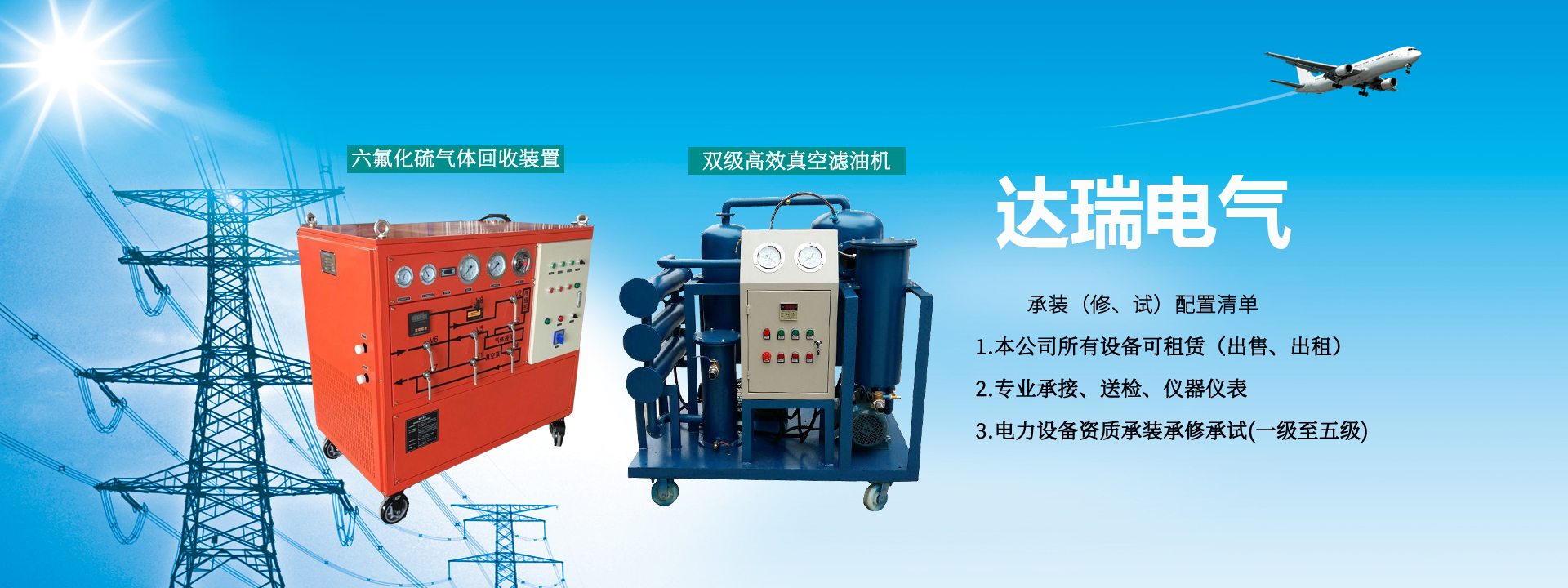
Power SF6 Gas Vacuum Pumping and Filling Equipment
Power SF6 gas vacuum pumping and filling equipment is mainly used for vacuum pumping, vacuum degree measurement, etc. during installation, operation, and maintenance of porcelain column type SF6 circuit breakers, transformers, and other SF6 electrical appliances. RTQC-60 is a compact SF6 gas filling and pumping device. The entire filling and vacuum pumping device is mounted on a very sturdy metal frame, which can move freely even on gravel roads. The device features high efficiency in vacuum pumping and filling, low energy consumption, automatic phase sequence switching system for power supply, high-precision thermocouple vacuum gauge, simple and practical, and the control system uses the latest SF6-specific valves. The whole machine is compact in size, light in weight, and low in noise.
Usage method:
1. This device uses single-phase 220V power supply.
2. Connect the device interface to the equipment to be evacuated (switch or pipeline) with a hose, insert a nylon sealing washer at the interface, and tighten it.
3. Close all valves! (Before starting, all valves must be closed first).
4. Connect the power supply, press the button to start the vacuum pump. Check the oil level of the vacuum pump. If the oil level is near the center of the oil gauge, it can be put into operation. If the oil level is too low, stop the pump and add oil to the center of the oil gauge. If it is too high and there is significant oil spraying, stop the pump and drain oil to the center of the oil gauge.
5. After confirming that the container and pipeline to be evacuated are at 0 gauge pressure, observe the vacuum pressure gauge M1 (the vacuum pump cannot withstand pressure impact, otherwise accidents may occur), open the main valve V0, and then according to the evacuation pipeline, open the valve on that pipeline to evacuate that circuit.
6. Vacuum measurement
6.1. Before vacuum pumping operation, it must be confirmed that the pipeline system and the product whose vacuum degree is to be measured are in a negative pressure state, otherwise it is easy to cause damage to the vacuum gauge sensor - vacuum gauge tube.
6.2. Open the vacuum gauge tube measuring valve (note: do not use excessive force when opening or closing this valve), then the system vacuum degree can be observed.
6.3. When the measurement is finished, remember to close the vacuum gauge tube measuring valve and the vacuum gauge power switch.
7. Shutdown
7.1. Close all ball valves.
7.2. Press the button to turn off the vacuum pump.
8. The filling process is to connect from the gas cylinder through a hose to each unit that needs filling. Different ball valves can be opened according to different units for direct filling (users need to configure a pressure reducer after the cylinder).