
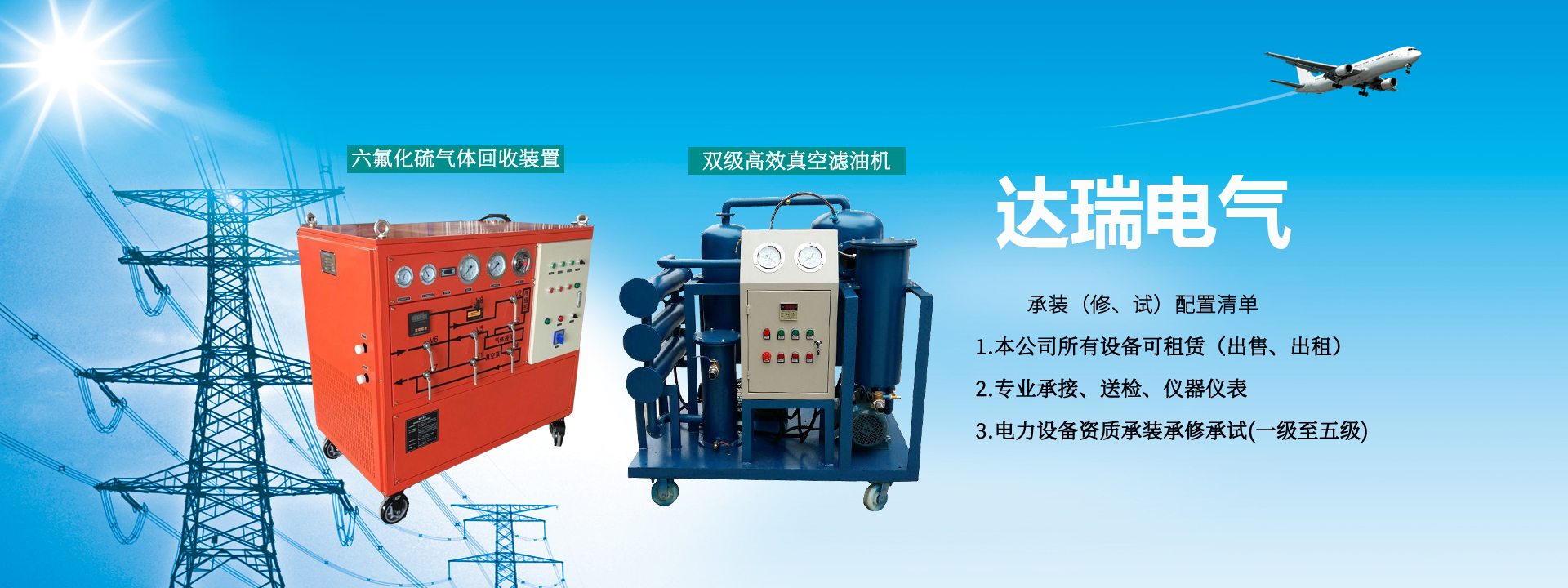
Function and Principle of New Explosion-proof Vacuum Oil Filter
An oil filter, also known as an oil filtering machine or oil purifier, is used to filter and purify contaminated oil, restoring or improving its properties, including cleanliness, water content, gas content, acid value, viscosity, flash point, insulation strength, color, etc. Moreover, it effectively removes impurities from the oil, ensuring the safe operation of oil-using equipment.
Working Principle
Inside, there is a rotor with dual spray nozzles, driven solely by the pressure generated by the oil itself. Once the equipment is started, a pump delivers oil from the oil tank into the rotor. When the rotor is filled with oil, it is ejected through the nozzles at the bottom of the rotating disc, generating driving force that spins the rotor at high speed. The rotation speed can reach over 4000-6000 r.p.m., producing a force more than 2000 times gravity, directly separating impurities from the oil by centrifugal force.
Vacuum Oil Filter
The vacuum oil filter efficiently removes free water and solid contaminants from petroleum-based oils such as hydraulic oil, lubricating oil, and turbine oil. It can also be used for bypass or online purification of oil as needed.
The oil filter can remove free water from the medium through demulsification, coalescence, and separation processes. After treatment, the free water content in the medium is below 200 PPM, and can be reduced to below 100 PPM in extreme cases. It can also filter out solid particles from the medium, controlling oil cleanliness to achieve NAS 4 or higher. (Note: This equipment is not suitable for applications requiring very low water content, such as removing dissolved water. In such cases, one solution is to use our coalescing vacuum oil filter series, which can quickly remove large amounts of water from the oil, ultimately reducing water content to 100 PPM, and in extreme cases, below 5 PPM.)