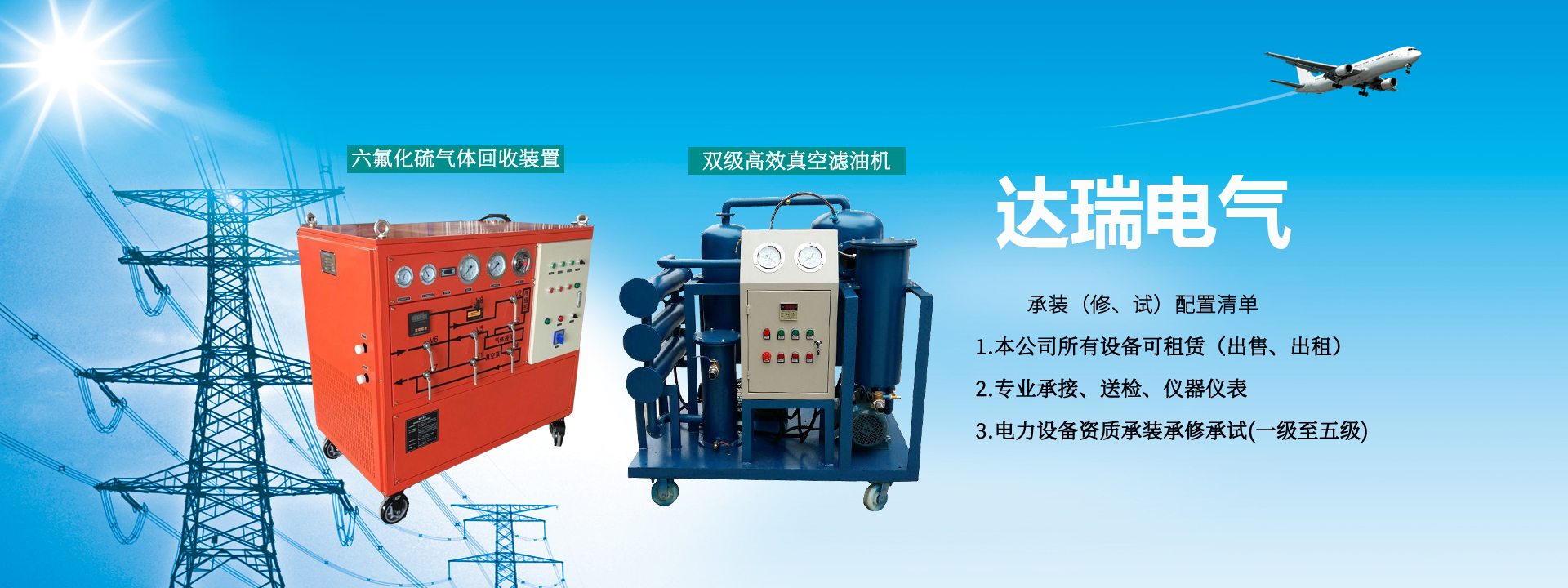
Emulsified contaminated oil passes through a coarse filter to remove larger mechanical impurities. After being heated by an infrared heater to a certain temperature (controlled by an automatic thermostat), due to the different expansion coefficients of oil and water, the density difference rapidly increases, accelerating the destruction of the "water-in-oil" film. Simultaneously, heating reduces the oil's viscosity, facilitating the coalescence and settling of water droplets. The hot oil flows slowly and unloads in a buffer, then enters the centrifugal chamber below the cylindrical coalescing chamber in an eccentric manner. The slight centrifugal action only deforms the emulsion film without stirring the oil. As the binding force between oil and water decreases and their specific gravities differ, when the vortex-like oil passes through a special separation tower, fine dispersed water droplets coalesce into larger and larger droplets during settling, collecting from top to bottom under the combined action of vortex and gravity, finally settling in the bottom water storage chamber. The primarily purified oil flows through an emulsifier removal chamber to further remove colloids, soaps, and other emulsifiers, as well as some pigments. It then passes through a felt-type filter to remove moisture and adsorbent fines. Finally, it enters a vacuum separation system equipped with a special separation tower, oil level control device, and strong condensation device for vacuum separation of residual moisture. The drier oil is then discharged by an oil pump, passes through a fine filter under increased pressure, which not only filters out fine solid impurities but also breaks any remaining emulsion film, achieving supplementary separation of oil and water, resulting in clean oil.