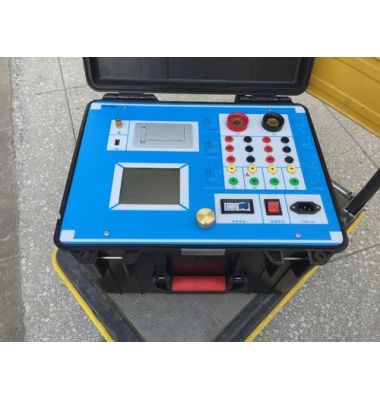

The ultrasonic partial discharge inspection and positioning instrument is a tool used to detect and locate partial discharge phenomena in power equipment. Below is an overview of an article about the ultrasonic partial discharge inspection and positioning instrument:
Ultrasonic Partial Discharge Inspection and Positioning Instrument: Principles, Applications, and Operation
Abstract
This article introduces the working principles, main features, application fields, and correct operation methods of the ultrasonic partial discharge inspection and positioning instrument. This instrument plays an important role in the maintenance and repair of power systems due to its high sensitivity and non-invasive detection method.
Introduction
The ultrasonic partial discharge inspection and positioning instrument is a tool that uses ultrasonic technology to detect partial discharge phenomena in power equipment. Partial discharge may indicate problems with the insulation system of the equipment, which, if not addressed promptly, could lead to serious safety accidents.
Working Principle
The working principle of the ultrasonic partial discharge inspection and positioning instrument is based on the characteristics of ultrasonic waves. When partial discharge occurs inside power equipment, high-frequency sound waves are generated, typically with frequencies above 20 kHz, which are beyond the range of human hearing. The ultrasonic sensor in the instrument can capture these sound waves and convert them into electrical signals. Through further signal processing, corresponding waveforms or sound prompts can be displayed on the screen, helping staff determine the location of the partial discharge.
Main Features
High sensitivity: Can detect extremely small partial discharge signals.
Non-invasive detection: Detection can be performed without any physical contact with the equipment.
Accurate positioning: By analyzing the time difference of sound waves reaching different sensors, the location of partial discharge can be precisely determined.
Strong anti-interference capability: Ultrasonic waves are less susceptible to electromagnetic interference, making them suitable for complex electromagnetic environments.
Easy operation: Usually equipped with an intuitive user interface and instruction manual.
Application Fields
Power systems: Used to detect partial discharge in power equipment such as transformers, switchgear, and cable terminations.
Substations: Monitor equipment within substations to prevent failures.
Laboratory testing: Evaluate the quality and performance of power equipment in a laboratory environment.
Operation Steps
Preparation: Wear personal protective equipment and confirm that the instrument is in good working condition.
Power on and warm up: Turn on the instrument and wait for it to complete the warm-up.
Set parameters: Adjust the instrument settings according to test requirements, such as selecting the appropriate frequency range.
Conduct detection: Hold the instrument, aim it at the equipment to be tested, and listen for beeping sounds or observe the waveform on the display.
Locate and record: If abnormal signals are found, locate them according to the instrument's instructions and record relevant information.
Develop a plan: Based on the detection results, formulate a follow-up monitoring schedule.
Precautions
Safe operation: Ensure all safety measures are in place before conducting detection.
Regular calibration: Calibrate the instrument regularly to ensure the accuracy of test results.
Professional training: Operators should receive professional training and be familiar with the use of the instrument.
Conclusion
The ultrasonic partial discharge inspection and positioning instrument is an indispensable tool in power system maintenance, helping technical personnel detect and resolve potential problems in equipment in a timely manner, ensuring the safe and stable operation of the power system.
Please note that this is only a general overview of the article. If you need more detailed technical parameters, application scenarios, or purchasing advice, please refer to the manufacturer's materials or consult professionals in the relevant field.