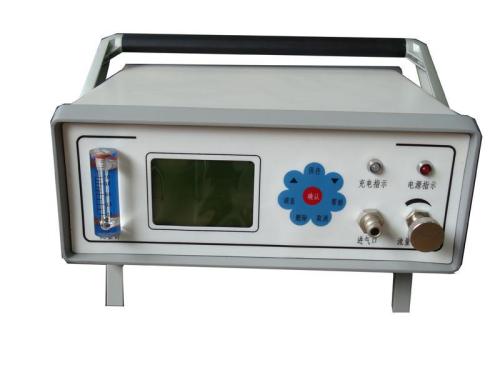
, which can simulate the partial discharge conditions that may occur during actual operation of power equipment, thereby helping to evaluate the insulation performance of the equipment. Below is an overview of an article about the simulated partial discharge tester:
Simulated Partial Discharge Tester
Introduction
Partial discharge detection is an important part of power system maintenance, which is of great significance for preventing power equipment failures and improving system reliability. As an efficient and precise detection method, the simulated partial discharge tester plays a crucial role in the research and development, production, and maintenance of power equipment.
Product Overview
Name: Simulated Partial Discharge Tester
Model: JF-2002
Manufacturer: Yangzhou Guohua Electric Co., Ltd.
Main Features
High detection sensitivity: Can capture very weak partial discharge signals.
Wide range of applicable test objects: Suitable for partial discharge detection of various power equipment.
High signal-to-noise ratio: Uses advanced signal processing technology to effectively suppress noise.
Clear display: Uses a large-screen oscilloscope tube, providing clear display of test waveforms.
Large dynamic range: The amplification system has a large dynamic range, capable of handling a wide range of signal amplitudes.
Multiple frequency band combinations: Provides various frequency band combination options to suit different detection needs.
Auxiliary functions: Auxiliary zero-marking system, linear and logarithmic display, etc.
Technical Parameters
Detection frequency: [Specific detection frequency range]
Sensitivity: [Specific sensitivity value]
Dynamic range: [Specific dynamic range value]
Scanning method: High-frequency elliptical scanning (power consumption less than 1 volt-ampere)
Display screen: Large-screen oscilloscope tube
Frequency band combinations: Nine different frequency band combinations
Auxiliary functions: Auxiliary zero-marking system, linear and logarithmic display, etc.
Working Principle
The working principle of the simulated partial discharge tester is based on the detection of physical phenomena and electrical signal changes generated during partial discharge. Its core components include:
Preamplifier: Used to capture and amplify weak discharge signals transmitted from high-voltage equipment.
Filter: Selects signals within a specific frequency range to eliminate interference.
Main amplifier: Further amplifies the signal to a detectable level.
Display unit: Displays graphical and numerical information of discharge pulses.
Usage Steps
Startup preparation: Turn on the device and select the appropriate detection mode.
Calibration: Connect the calibration pulse generator and calibrate as needed.
Detection: Place the sensor or probe near the equipment under test and observe the screen display.
Data analysis: Analyze data based on the displayed waveform and numerical information.
Data recording: Save the detection data.
Shutdown: After detection, press and hold the power button to turn off the device.
Application Scenarios
Power transformers: Detect partial discharge phenomena inside transformers.
Switchgear: Including high-voltage switchgear and ring main units.
Cable joints: Check the insulation condition of cable joints and terminations.
GIS/GCB: Detect partial discharge in gas-insulated switchgear.
Motors: Evaluate the insulation status of motors.
Maintenance and Care
Cleaning: Use a soft cloth to wipe the device surface.
Storage: Store in a dry and ventilated place.
Calibration: Regularly calibrate the device.
Safety Precautions
Read before operation: Please carefully read the user manual.
Protective measures: Wear necessary personal protective equipment.
Do not touch: Do not touch high-voltage equipment.
Conclusion
The simulated partial discharge tester is an important tool in power system maintenance. It helps technicians detect potential partial discharge problems early, thereby taking preventive measures to ensure the safe and stable operation of the power system. With the development of technology, the functions and performance of such testers are also continuously improving to meet increasingly complex detection needs.
The above is a typical article overview of the simulated partial discharge tester. Specific product features and parameters may vary depending on the manufacturer and model. If you need detailed information about a specific model, please provide the specific model name or other relevant information.