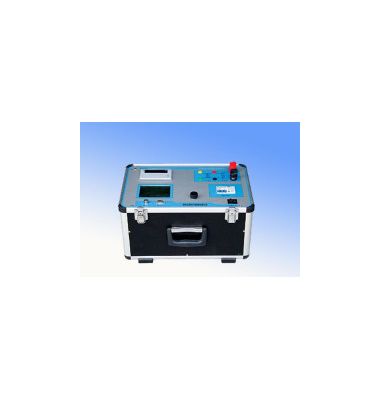
The ultrasonic partial discharge inspection and positioning instrument is a professional device used to detect partial discharge phenomena inside power equipment. Partial discharge detection is of great significance for evaluating the insulation condition of power equipment and preventing faults. This article will provide a detailed introduction to the working principle, characteristics, application scope, and purchasing guide of the ultrasonic partial discharge inspection and positioning instrument.
Working Principle
The working principle of the ultrasonic partial discharge inspection and positioning instrument is based on the physical phenomena generated during partial discharge, especially ultrasonic signals. When partial discharge occurs inside power equipment, a series of physical phenomena are generated, including:
Electrical pulses: Current pulses generated by partial discharge.
Ultrasonic waves: Ultrasonic signals generated by partial discharge.
Electromagnetic radiation: Electromagnetic wave signals generated by partial discharge.
Light: Light signals generated by partial discharge.
Chemical reactions: Chemical changes induced by partial discharge.
The ultrasonic partial discharge inspection and positioning instrument captures these ultrasonic signals through built-in sensors, and processes and analyzes them through built-in circuits and software to determine whether partial discharge phenomena exist, and further locate the position of the discharge source.
Main Features
Features of the Ultrasonic Partial Discharge Inspection and Positioning Instrument
High sensitivity: Capable of detecting weak ultrasonic signals.
Easy operation: Equipped with an intuitive user interface for convenient on-site operation.
Data recording and analysis: Can record detection data and perform analysis through software.
Multiple display modes: Supports various display modes such as elliptical, linear, and sinusoidal, facilitating observation of discharge pulses.
Auxiliary functions: Some advanced models also feature auxiliary zero-marking systems, linear/logarithmic dual-function pointer meters, and digital meters.
Strong anti-interference: Utilizes digital filtering technology to effectively eliminate on-site interference.
Remote positioning: Can remotely locate the position of partial discharge sources.
Technical Parameters
Ultrasonic sensor type: Built-in ultrasonic sensor.
Frequency range: Typically 20kHz to 100kHz.
Sensitivity: Typically capable of detecting tiny ultrasonic signals.
Battery life: Generally several hours.
Display unit: Uses a color LCD screen, supporting multiple display modes.
Data storage: Built-in memory, can store a large amount of detection data.
Application Scope
The ultrasonic partial discharge inspection and positioning instrument is widely used in the maintenance and repair of power systems, including but not limited to:
Power transformers: Used to monitor partial discharge conditions inside transformers.
High-voltage switchgear: Monitors partial discharge phenomena in switchgear.
Cable terminations: Detects partial discharge in cable terminations.
Instrument transformers: Detects partial discharge in voltage transformers and current transformers.
Power cables: Evaluates the insulation condition of cables.
Railway power systems: Especially suitable for inspection and positioning of various insulation and connection faults in the overhead contact system of railway power systems.
Purchasing Guide
When selecting an ultrasonic partial discharge inspection and positioning instrument, the following points should be noted:
Detection sensitivity: Confirm whether the detection sensitivity of the device meets requirements.
Operational convenience: Choose a device that is simple to operate and has a user-friendly interface.
Data analysis function: Consider whether the device has strong data analysis capabilities for subsequent evaluation and diagnosis.
Compatibility: Ensure the device is compatible with existing testing systems.
After-sales service: Understand the warranty period and service policies provided by the manufacturer to ensure timely support when problems are encountered during use.
Recommendations for Excellent Ultrasonic Partial Discharge Inspection and Positioning Instrument Manufacturers
Yangzhou Tuopu Electrical Technology Co., Ltd.: Provides high-performance ultrasonic partial discharge inspection and positioning instruments, suitable for various detection needs.
Zhuoya Electric: Focuses on the research, development, and production of power equipment testing instruments, with rich experience and a good market reputation.
Wuhan Hezhong Electric: Committed to the manufacturing of ultrasonic partial discharge inspection and positioning instruments, with reliable product quality and thoughtful service.
Conclusion
The ultrasonic partial discharge inspection and positioning instrument is one of the indispensable tools in power system maintenance, playing an important role in preventing and reducing power equipment faults. By comprehensively considering the above factors, users can select the ultrasonic partial discharge inspection and positioning instrument that best suits their needs.
Please adjust the content of this article according to your specific needs, and if you need more detailed information or specific data, feel free to let me know.