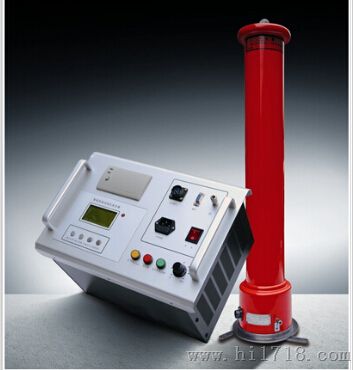
The DHX-II high-voltage phase verifier is a precision instrument specifically used for phase calibration of high-voltage lines in power systems. It plays a key role in the installation, inspection, and maintenance of power lines and equipment, ensuring safe grid integration and operation of the power system. This article will detail the working principle, main features, usage methods, and application value of the DHX-II high-voltage phase verifier in power systems.
1. Working Principle
The DHX-II high-voltage phase verifier is based on the generalized AC bridge principle, comparing the phase difference between two high-voltage lines or different phases of the same line to determine whether they are suitable for grid integration. The device consists of two parts: the phase verification rod and the phase verification meter. The phase verification rod acts as a sensor that can sense the electric field of high-voltage lines, while the phase verification meter is used to display and analyze the received signal to determine the phase relationship. When the phase difference between two lines is less than 10°, they are considered in phase; when greater than 30°, they are out of phase.
2. Main Features
The DHX-II high-voltage phase verifier has the following notable features
Safe and reliable: Designed with safety protection measures, operators do not need to directly contact high-voltage lines, reducing operational risks.
Easy to operate: The instrument is equipped with a backlit display and auto-off function, allowing easy data reading even in low-light environments.
Excellent electrical insulation performance: Tested by relevant national authorities, the electrical insulation performance meets national standards, ensuring long-term stable operation of the instrument.
Voice prompt function: Some models, such as the DHX-II voice phase verifier, have a voice prompt function, making it convenient for operators to obtain phase verification results in noisy environments.
Wide applicability: Suitable for high-voltage power lines of 6kV and above, meeting the phase verification needs of power departments and users.
3. Usage Method
When using the DHX-II high-voltage phase verifier for phase verification operations, the following steps should be followed:
Self-check: Perform a self-check before use to ensure the instrument is in normal working condition.
Connect the phase verification rod: Connect the phase verification rod to the high-voltage line to be tested.
Turn on the instrument: Turn on the instrument and set parameters as needed.
Phase verification detection: Maintain a safe distance and perform phase comparison.
Read data: Observe the phase difference data on the display screen, while paying attention to voice prompts.
Record results: Record the phase verification results, including the phase difference and whether they are in phase.
4. Application Value
The application value of the DHX-II high-voltage phase verifier in power systems is mainly reflected in:
Preventing grid integration accidents: Perform phase verification before grid integration of power lines to avoid serious accidents such as short circuits caused by phase mismatch.
Improving system stability: Ensure phase coordination among various parts of the power system, enhancing overall operational efficiency and stability.
Reducing maintenance costs: Through regular phase verification detection, potential phase deviations can be identified in advance, reducing maintenance costs and power outage risks.
Conclusion
As an indispensable detection tool in power systems, the DHX-II high-voltage phase verifier, with its precise phase measurement capability and safe operation design, provides important guarantees for the safe grid integration and stable operation of power systems. With the development of the power industry, the DHX-II high-voltage phase verifier will continue to play a key role in power engineering practice, contributing to the modern management of power systems.