
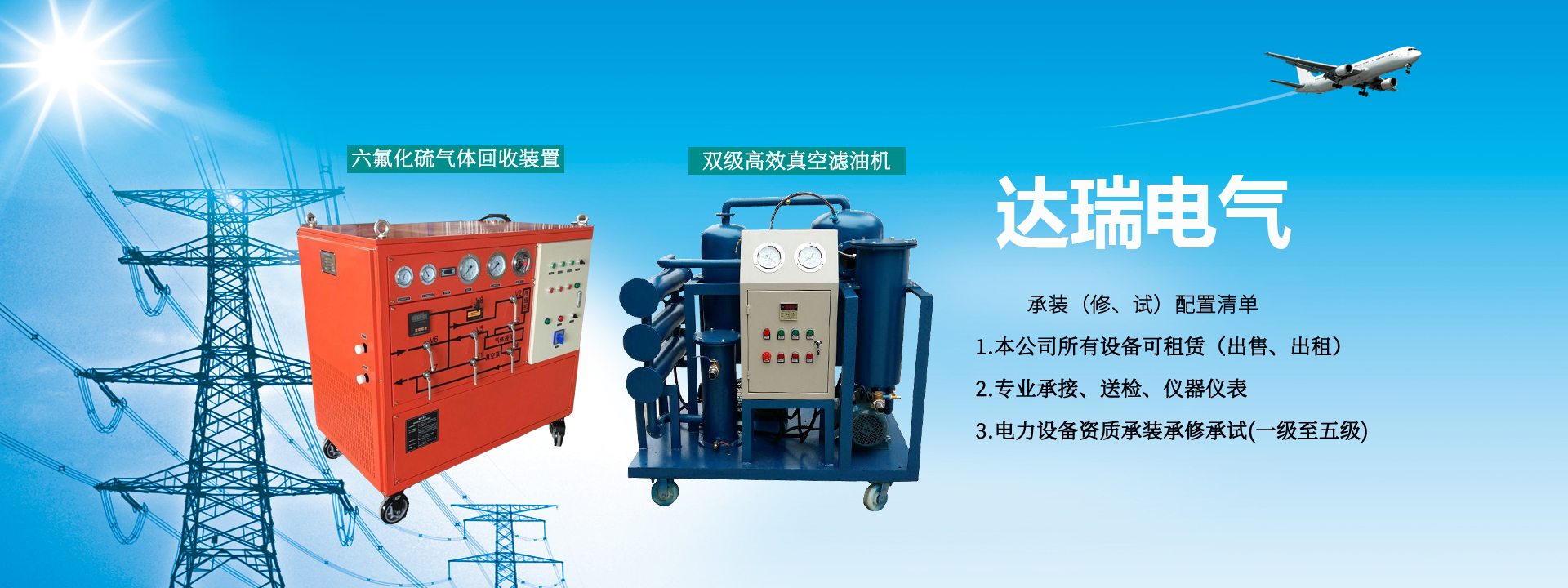
Intelligent and Efficient Vacuum Oil Filter
Intelligent and Efficient Vacuum Oil Filter is designed by our company to meet the needs of on-site maintenance of various high and low voltage oil-filled equipment in power maintenance departments. Guided by the national standard DL/T521-93 "Guidelines for the Use of Vacuum Oil Purifiers", it features compact size, light weight, easy mobility, low noise, long continuous operation time, stable performance, and convenient operation. It is an ideal equipment for filtering water, gas, and impurities from transformer oil, turbine oil, lubricating oil below 220#, hydraulic oil, and other oils in power stations, substations, electrical appliance factories, and industrial and mining enterprises.
Intelligent and Efficient Vacuum Oil Filter Working Principle
It is designed based on the principle of different boiling points of water and oil. It consists of a vacuum heating tank, fine filter, condenser, primary filter, water tank, vacuum pump, oil discharge pump, and electrical cabinet. The vacuum pump extracts air from the vacuum tank to create a vacuum. Under atmospheric pressure, external oil enters the primary filter through the inlet pipe, removing larger particles, and then enters the heating tank. After heating to 40~75°C, the oil passes through an automatic oil float valve, which automatically controls the balance of oil entering and leaving the vacuum tank. The heated oil is rapidly rotated by spray wings to separate into a semi-mist state, where water in the oil rapidly evaporates into steam and is continuously drawn by the vacuum pump into the condenser. The steam entering the condenser is cooled and returned to water for discharge. The oil in the vacuum heating tank is discharged by the oil discharge pump into the fine filter, where particulate impurities are removed through filter paper or filter elements, thus completing the entire process of quickly removing impurities, water, and gas from the oil, and discharging clean oil from the outlet.
Inspection and Testing of the Oil Filter:
Check that the electrical equipment (various meters) of the vacuum oil filter has been regularly inspected and tested by a testing unit and is qualified before use.
Check whether the machine is placed stably; test run should show no wobbling or vibration.
Check whether the inlet and outlet oil pipes are installed correctly, whether the external pipes are firmly connected, and whether the joints between hoses and metal pipes are tightened with hose clamps to prevent oil pipe detachment during operation.
Check whether the external power supply is correct and whether the connected power cable meets the capacity requirements of the oil filter.
Check that the machine housing is reliably grounded.
Check that all rotating parts have no jamming.
Conduct a test run to check that the rotation direction of the oil pump, vacuum pump, and other motors meets requirements.
Check whether the cooling water connection is reliable and the water circuit is unobstructed.
Check whether the fire extinguishing equipment provided on site meets requirements.
Usage Precautions:
1. When connecting the power supply, ensure the ground wire is properly connected before operation.
2. Before operation, pay attention to the motor rotation direction, which should match the arrow direction.
3. Do not turn on the heater without oil circulation; otherwise, the heater may burn out, or in severe cases, explode.
4. Before discharging oil, open all valves on the oil outlet pipe.
5. The working environment temperature should not be below -30°C or above +40°C; otherwise, it is not suitable for use.