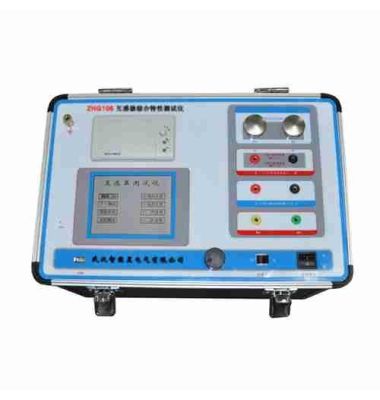

The application of wireless transmission technology in the power industry, especially for phase verification operations under high-voltage environments, has brought revolutionary changes. Traditional phase verification operations require operators to directly approach high-voltage lines or equipment, which not only increases operational risks but also limits operational flexibility and efficiency. However, with the maturity of wireless transmission technology, this situation has been fundamentally improved.
Advantages of wireless signal data transmission
Enhanced safety: By using wireless signal transmission for data, operators do not need to directly contact high-voltage equipment and can perform phase verification operations from a safe distance, greatly reducing the risk of electric shock and other safety accidents.
Improved efficiency: Wireless transmission technology allows operators to monitor phase information at multiple points simultaneously without having to approach each device individually for measurement, saving time and effort and significantly improving operational efficiency.
Real-time data feedback: Wireless phase verifier can transmit measurement data in real time, allowing operators to immediately obtain phase information and make quick judgments and decisions, which is crucial for timely troubleshooting of power system faults.
Adaptation to complex environments: Wireless signal transmission is not limited by geographical obstacles, and even in complex terrain or environments with limited visibility, it can maintain stable communication quality, ensuring data accuracy and integrity.
Promoting remote monitoring: Wireless technology also supports remote monitoring, allowing managers or technicians to receive phase verification data in real time from a control room or office for analysis and decision-making, without needing to be physically present at the site, achieving true remote operation and management.
Key technologies for implementing wireless phase verification operations
Radio Frequency Identification (RFID) technology: Used for equipment identification and positioning to ensure accurate transmission of wireless signals.
Bluetooth or Wi-Fi communication protocols: Enable wireless data exchange between devices, ensuring stability and speed of data transmission.
Encryption technology: Protects data security and prevents information from being intercepted or tampered with during transmission.
Signal enhancement and anti-interference technology: Maintains signal clarity and stability in complex electromagnetic environments, ensuring accurate data transmission.
Conclusion
The application of wireless transmission technology in high-voltage phase verification operations not only enhances operational safety and efficiency but also opens a new chapter in intelligent and remote operations in the power industry. With continuous technological advancement, we have reason to believe that future power maintenance and detection will be more intelligent, safer, and more efficient.