
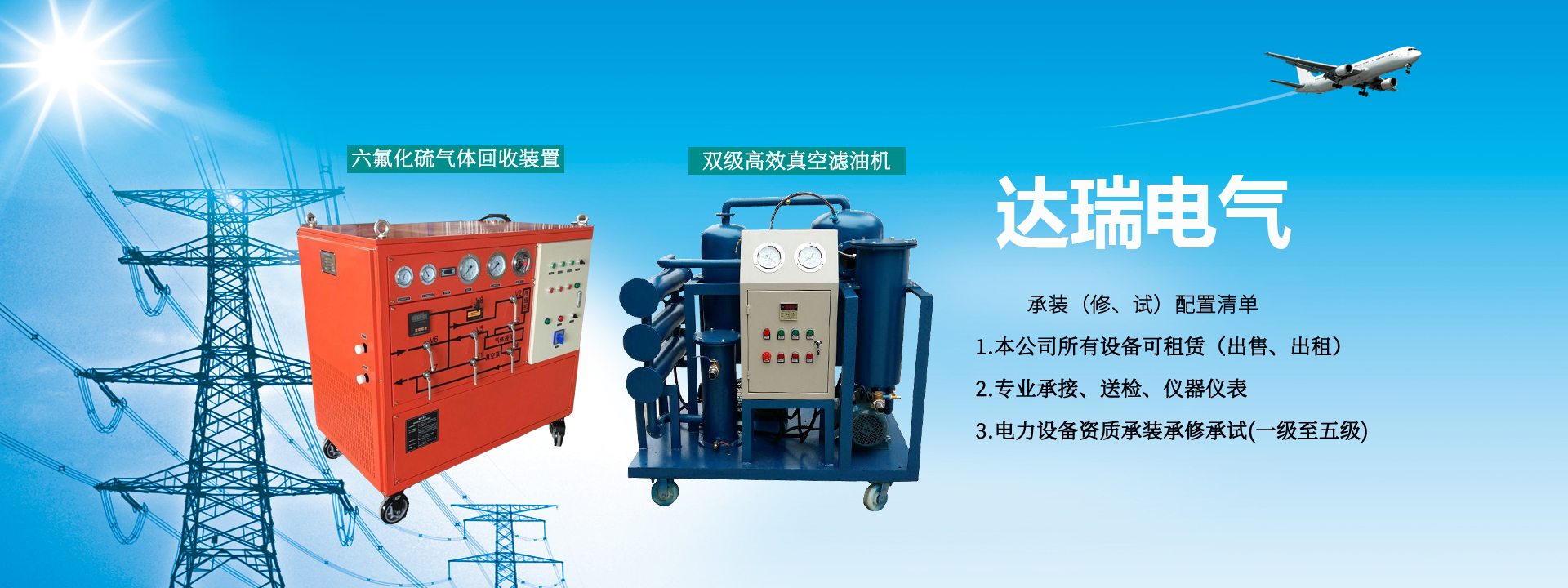
Vacuum Oil Recovery Unit
We recycle second-hand Roots oil-free vertical vacuum units, purchase used Roots water ring vacuum units, transfer second-hand two-stage Roots oil-free vertical vacuum units, and where to find used three-stage Roots oil-free vertical vacuum units. The Roots water ring vacuum unit is more advantageous than other vacuum pumps when using a water ring pump as the backing pump. It overcomes the limitations of a single water ring pump, such as the ultimate pressure difference (the ultimate pressure of the unit is greatly improved compared to a water ring pump) and the low pumping speed at a certain pressure, while retaining the advantages of the Roots pump, which can work quickly and has a high pumping speed. It is especially suitable for pumping large amounts of condensable vapor, particularly when the gas ballast oil-sealed mechanical vacuum pump is insufficient in removing condensable vapor, or when the solvent used can deteriorate the pump oil and affect performance, or when the vacuum system does not allow oil contamination. When equipped with explosion-proof motors and electrical components and following corresponding safety rules, it can also pump flammable and explosive gases. Therefore, Roots pump-water ring pump units are widely used in vacuum distillation, vacuum evaporation, dehydration and crystallization in the chemical industry; freeze drying in the food industry; vacuum drying in the pharmaceutical industry; polyester chips in the textile industry; and vacuum systems for high-altitude simulation tests.
Roots vacuum pumps (mechanical booster pumps) used for higher vacuum cannot directly exhaust to the atmosphere. If they do, the pressure difference between the inlet and outlet of the Roots vacuum pump will be too large, causing overload. Simply increasing the motor power of the Roots vacuum pump can cause overheating, and the small clearances between the rotors may quickly seize due to thermal expansion. To ensure that the Roots vacuum pump can achieve higher vacuum, the clearances between the rotors must be maintained. Therefore, a backing pump must be used with the Roots vacuum pump. The backing pump reduces the system pressure to a certain range before starting the Roots vacuum pump, thus avoiding overload. The backing pump can be a water (liquid) ring vacuum pump, rotary vane vacuum pump, sliding vane vacuum pump, reciprocating vacuum pump, or other vacuum pumps that can directly exhaust to the atmosphere.
In general, for Roots vacuum units, using a water ring pump as the backing pump is more advantageous than other vacuum pumps, mainly because it can pump large amounts of condensable vapor, especially when the gas ballast oil-sealed mechanical vacuum pump is insufficient in removing condensable vapor, or when the solvent used can deteriorate the pump oil and affect performance, or when the vacuum system does not allow oil contamination.
Unit Types
Roots pump-water ring pump units are widely used in vacuum systems for chemical, food freeze drying, high-altitude simulation tests, etc. Such combined units generally have the following types:
Roots pump - water ring pump
In the unit, the water ring pump is used to create the required backing vacuum for the Roots pump. Therefore, the allowable exhaust pressure of the water ring pump is required; that is, on one hand, the ultimate vacuum of the water ring pump should be improved as much as possible, and on the other hand, the allowable exhaust pressure of the Roots pump should also be increased.
Generally, the ultimate vacuum of a single-stage water ring pump is not high, and the pre-vacuum required by Roots pumps produced in China is relatively high. Therefore, in practice, a single-stage water ring pump is not used as the backing pump for a Roots pump; instead, a two-stage water ring pump that can improve the ultimate vacuum is used as the backing pump. Using a two-stage water ring pump can also improve the ultimate vacuum of the unit.
The ultimate vacuum of a single Roots pump is relatively low, especially when it operates in combination with a water ring pump, the application range is limited, and the ultimate vacuum of the entire unit may be even lower. However, if two Roots pumps are connected in series and then combined with a water ring pump, the ultimate vacuum of the unit can be greatly improved.
Therefore, in this type, it is common to see two Roots pumps in series with a two-stage water ring pump as the backing pump to form a unit.
Roots pump - water ring pump - atmosphere pump unit
Even with a two-stage water ring pump, the improvement of ultimate vacuum is only within a certain range because it is limited by the saturated vapor pressure of water. The theoretical ultimate pressure of a water ring pump is the saturated vapor pressure of water. Considering factors such as gas backflow, the actual ultimate pressure of a water ring pump is significantly higher than the saturated vapor pressure at that water temperature. To improve the ultimate vacuum of the backing pump, the water ring pump can be combined with an atmosphere pump.
In this way, the ultimate vacuum after connecting one stage of atmosphere pump can reach 20~30 Torr. If the water ring pump is combined with a two-stage atmosphere pump, the ultimate vacuum can reach 2~10 Torr.
Roots pump - water ring pump parallel mechanical vacuum pump
This unit is mainly used for systems that need to handle large amounts of water vapor and require a relatively high ultimate vacuum, such as in vacuum drying.
In vacuum systems that require handling large amounts of water vapor, using a water ring pump is more suitable, but due to its low ultimate vacuum, the ultimate vacuum of the entire unit is low. Although in vacuum systems requiring higher vacuum, mechanical vacuum pumps with higher ultimate vacuum are needed as backing pumps, the water ring pump has high power consumption, low efficiency, and high noise. In long-term vacuum drying systems, using a water ring pump as the backing pump for a Roots pump is uneconomical.
In the above cases, a gas ballast mechanical vacuum pump can be connected in parallel with a water ring pump as the backing pump for the Roots pump. During vacuum drying, the water ring pump is first used for pre-evacuation until the water vapor is greatly reduced, then the gas ballast mechanical vacuum pump is started and the water ring pump is cut off. If the drying process takes a long time, the required cooling water and power are relatively small.
Unit operation sequence:
1) When there is no bypass valve in the unit, the water ring pump should be started first. The gas in the evacuated system passes through the Roots pump (the gas pushes the Roots pump rotors to rotate by themselves, like a flow meter) into the water ring pump and then is discharged to the atmosphere. When the suction pressure of the water ring pump (if an atmosphere pump is connected in series, it is the suction pressure of the atmosphere pump) reaches the initial specified value of the Roots pump (i.e., the allowable exhaust pressure), the Roots pump is started, and the unit officially operates and begins work.
2) When there is a bypass valve in the unit, as shown in Figure 5, start the water ring pump first, then start the Roots pump. At this time, the pressure difference between the inlet and outlet of the Roots pump is large, and the bypass valve opens automatically. Part of the gas in the evacuated container passes through the bypass valve into the water ring pump, and another part enters the water ring pump through the Roots pump. Obviously, the pumping speed increases, thus quickly reaching the pre-vacuum of the Roots pump. When the pressure difference between inlet and outlet is small, the valve closes automatically (or manually), and the unit officially works. This method can greatly shorten the pre-evacuation time, but the equipment is more complex.
Unit - Roots pump - backing pump performance relationship
The performance of the unit is closely related to the performance of the Roots pump, and the performance of the Roots pump varies with different backing pumps.
1) Since there are clearances between the rotors of the Roots pump and between the rotors and the casing, backflow exists, and this backflow is affected by the inlet and outlet pressures. Even for the same Roots pump, the pumping speed may vary when different backing pumps are used.
The pumping speed of a Roots pump can be determined by the following formula:
δ=δ0(P2/P1/K)
Where: δ0 - designed pumping speed;
P1 - inlet pressure;
P2 - outlet pressure;
K - inherent constant, determined by the rotor shape, clearance, rotor peripheral speed, and outlet pressure of the pump.
From the above formula, it can be seen that the pumping volume is affected by the ratio of outlet pressure to inlet pressure, that is, if the pumping speed of the backing pump is increased, the pumping speed of the Roots pump will also increase.
(2) The ultimate pressure is determined by the pumping speed of the pump, the backflow through the clearances, the leakage of the pump body, and the outgassing on the high vacuum side. That is:
P0=(Q1+Q2+Q3)/δ where: P0 - ultimate pressure;
δ - pumping speed;
Q1 - backflow;
Q2 - leakage;
Q3 - outgassing.
Among these parameters, Q1 is greatly affected by the exhaust pressure, i.e., the ultimate pressure of the backing pump. When a water ring pump is used as the backing pump, the ultimate pressure of the Roots pump varies with the saturated vapor pressure of the water ring.
It is a performance comparison when the same Roots pump is equipped with different backing pumps.
The higher the ultimate vacuum of the backing pump, the higher the ultimate vacuum of the unit; using two Roots pumps in series can improve the ultimate vacuum of the unit (essentially, the first Roots pump serves as the backing pump for the second), and the performance curve expands gently, that is, the application range expands (as seen from the comparison of curves 1 and 2, and curves 3 and 5). The curves of units 1 and 2 are roughly the same. Similarly, the curves of units 3, 4, and 5 also have similarities. However, the curves of units 1 and 2 and the curves of units 3, 4, and 5 are completely different sets of curves. This indicates that for the same Roots pump, when different backing pumps are selected, the performance curves of the unit are essentially different. It can be seen that the backing pump has a considerable impact on the unit performance.
Selection of water ring pump
The so-called water ring pump is a liquid ring pump that uses water as the liquid ring. Using water as the liquid ring has many advantages, such as low cost, easy availability, and no environmental pollution. However, it also has a major disadvantage: due to the high saturated vapor pressure of water, the suction pressure of the water ring pump is also high. If a liquid with lower saturated vapor pressure is used as the liquid ring, the ultimate vacuum of the pump can be improved. If the allowable exhaust pressure of the Roots pump in a unit is 10 Torr, then when using water as the liquid ring, an atmosphere pump must be added to serve as the backing pump for the Roots pump. If mineral oil is used as the liquid ring, it can serve as the backing pump without adding an atmosphere pump, thus simplifying the device.