
Introduction of Vacuum Oil Skimmer Manufacturer
Oil skimmers mainly include: weir type, belt type, dynamic inclined plane type, brush type, and vacuum type. Among them, weir type, belt type, dynamic inclined plane type, and brush type are used at sea; vacuum type is used for shoreline protection.
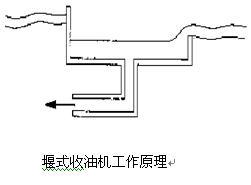
1. Weir type oil skimmer (equipped with Sea Mark 052)
The weir type oil skimmer is one of the most commonly used oil skimmers. It is a device that uses gravity to make oil flow from the water surface into an oil collector and pumps the oil in the collector into a storage container. It is suitable for recovering medium and low viscosity oil spills in calm waters with wave heights less than 0.3 meters. Its characteristics include small size, light weight, simple structure, easy maintenance, high recovery speed, and wide applicability.
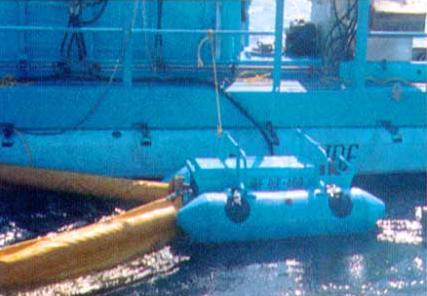
2. Belt type oil skimmer ("Qinggang Environmental Protection No.1")
The belt type oil skimmer uses a rotating oleophilic adsorption belt to adsorb oil spills on the water surface, and the adsorbed oil is collected into the oil collector through scrapers or rollers. The belt type oil skimmer mainly consists of an adsorption belt, scrapers (or pressure rollers), a transmission device, and an oil collector. It has the advantages of high recovery rate, high recovery efficiency, wide adaptability, and good wave-following performance. At the same time, it also has disadvantages such as complex structure, large size, the need for lifting equipment for operation, and high cost.
3. Dynamic inclined plane type oil skimmer (Sea Mark 12, Sea Mark 24, and Offshore Oil 251)
The dynamic inclined plane type oil skimmer mainly consists of a screw-type oil pump, a detachable dynamic inclined plane conveyor belt, a ship-mounted suspension support system, oil-proof inflatable or solid floats, oil guide plates, piping systems, a power station, and an automatic control system. Its characteristics include a wide range of applicable oil viscosity, the ability to recover oil spills while moving, insensitivity to currents, suitability for oil layers of different thicknesses, less impact from floating debris, wide applicability, and high recovery efficiency and rate.
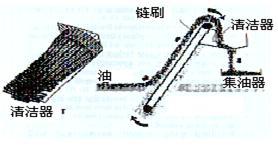
4. Brush type oil skimmer (Korean professional oil spill response vessel)
The brush type oil skimmer refers to a mechanical device that uses brushes to recover oil spills. It mainly consists of several groups or rows of brushes, scrapers, and an oil collector. Its working principle: oil spills adhere to the rotating brushes and are scraped off and guided into the oil collector, then pumped into storage devices. Its characteristics include high recovery efficiency and rate, good wave-following performance, the ability to handle waves up to 1 meter high, and easy maintenance.
5. Vacuum type oil skimmer
The vacuum type oil skimmer is usually called a "skimmer head". It refers to a device that uses a suction pump or vacuum pump to create a vacuum in a vacuum oil storage tank, and recovers the oil-water mixture through the pressure difference at the skimmer head. The vacuum type oil skimmer has the characteristics of small operating device size, simple operation, easy portability and movement, insensitivity to debris, easy maintenance, and low cost.
6. Disc type oil skimmer
The disc type oil skimmer refers to an oil spill recovery equipment that uses discs made of oleophilic materials to rotate in the oil-water mixture. When the discs rotate out, the adsorbed oil is scraped into the oil collector by scrapers and pumped to storage containers. Its advantages include good adaptability to light oils, high recovery efficiency, good adaptability to debris, simple maintenance, and wide applicability. 7. Rope type oil skimmer
The rope type oil skimmer uses a ring-shaped rope mop made of floating oleophilic materials to adsorb oil spills on the water surface. The oil adsorbed by the rope mop is squeezed out through a roller squeezing device and stored in an oil collector. It has the advantages of good wave-following performance, high recovery efficiency, less impact from debris, large coverage area, easy maintenance, and low cost.