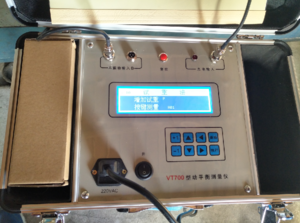
Product Overview
The VT900 dynamic balancing measuring instrument is a portable device for detecting and correcting the dynamic balance of rotating machinery. It uses piezoelectric sensors to collect vibration signals and calculates the amplitude and phase of unbalance through digital signal processing technology, helping users determine the rotor's balance status. It is suitable for on-site dynamic balancing measurement and correction work.
Main Functions
The VT900 dynamic balancing measuring instrument features single-plane and dual-plane dynamic balancing measurement functions, and can display rotational speed, vibration amplitude, phase angle, and unbalance amount. The instrument supports multiple correction methods such as the trial weight method and influence coefficient method, and has built-in vector decomposition calculations to guide users in adding or removing counterweights at specified positions on the rotor. Measurement results can be stored and exported for subsequent analysis.
Technical Parameters
Speed measurement range: 60–60000 r/min; Vibration measurement range: 0–2000 μm (peak-to-peak); Phase measurement accuracy: ±1°; Unbalance reduction rate: ≥85%; Display: 3.5-inch color LCD screen; Data storage: can store 200 sets of measurement data; Power supply: built-in lithium battery, continuous working time about 8 hours; Operating temperature: -10℃–50℃; Dimensions: about 200mm×100mm×40mm; Weight: about 0.5kg (including battery).
Application Scenarios
The VT900 dynamic balancing measuring instrument is suitable for dynamic balancing detection and correction of rotating equipment such as fans, motors, water pumps, centrifuges, machine tool spindles, and transmission shafts. It can be used in manufacturing workshops, equipment installation sites, or maintenance workshops to help reduce equipment vibration, lower bearing wear, and extend equipment service life.
Instructions for Use
Before use, securely fix the sensor on the bearing housing or a vibration-sensitive position, and ensure the speed signal is accurately connected. During measurement, select single-plane or dual-plane balancing mode according to the rotor type, and complete the trial weight, measurement, and correction steps following the instrument prompts. For specific operations, please refer to the product user manual.